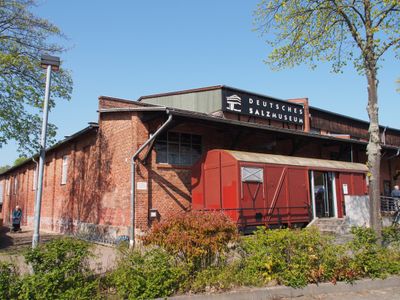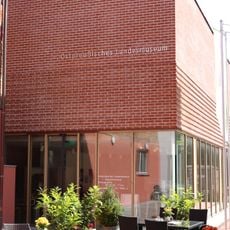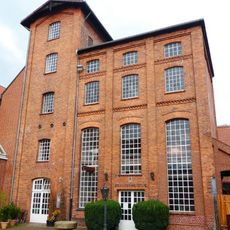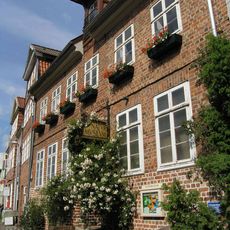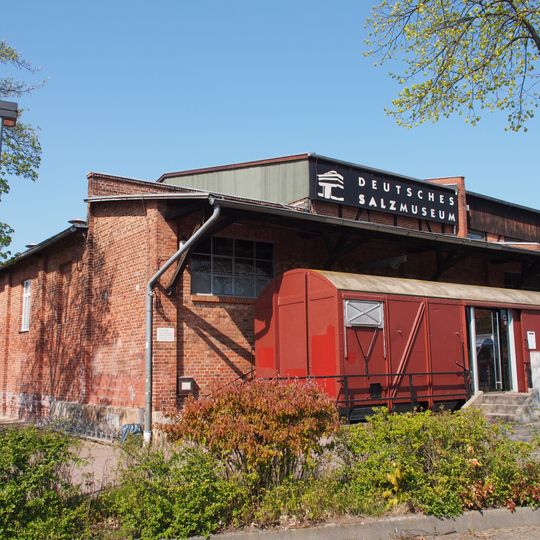
German Salt Museum, Salt production museum in Lüneburg, Germany.
The German Salt Museum is a museum and architectural heritage monument in Lüneburg, housed in a former boiling house built in 1924 as part of the old saltworks complex on the edge of the old town. The building retains its original industrial form, with high ceilings and large open floors where the salt production equipment once stood.
The Lüneburg Saltworks was the oldest and once the largest industrial operation in central Europe. Production on this site ended when the works closed in 1980, and the German Salt Museum was established in the former boiling house. In 1991 the museum received the Council of Europe Museum Prize.
The permanent exhibition occupies part of the boiling house, while temporary shows are held in the donkey stable, moved here from a western site; its older section dates from around 1852 and belonged to the chemical factory linked to the saltworks. In summer, staff in historical costume demonstrate salt boiling in a replica medieval boiling hut, using lead pans heated over wood fires.
The museum occupies the former boiling house and the relocated donkey stable south of it, on a remnant of the town rampart; the brine tanks of the early 19th century stand nearby. The site is a limited-access wheelchair site, so visitors with mobility needs should check access before arriving. Special exhibitions are held in the donkey stable, the permanent display in part of the boiling house.
Beneath Lüneburg lies a vast underground salt deposit, and its slow dissolution over centuries caused the ground to sink in parts of the old town, which explains why many historic buildings there lean at odd angles. The museum touches on this geological process, connecting salt extraction directly to the physical shape of the city today.
The community of curious travelers
AroundUs brings together thousands of curated places, local tips, and hidden gems, enriched daily by 92,637 contributors worldwide.