Drachenhöhle Syrau, Show cave in Rosenbach, Germany.
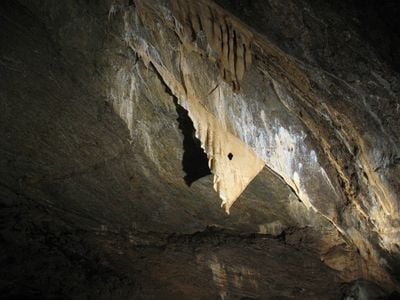
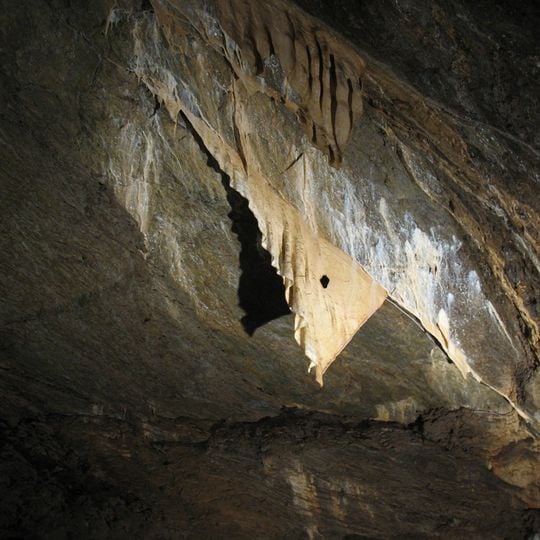
Drachenhöhle Syrau is a carbonate karst cave in Syrau, 15 metres deep and 550 metres long, of which 350 metres are open to visitors. Its halls hold several interconnected cave lakes. The best-known sinter formation is a 50-centimetre sinter flag called "Gardine", hanging curtain-like from the ceiling with vertical ribs and folds, tapering to a jagged lower edge, with a single round hole near its centre.
Quarry foreman Ludwig Undeutsch discovered the cave on 14 March 1928 during quarrying work. Within days its survival was secured despite economic concerns, and it opened to visitors on 28 September 1928. Alfred Uhlemann and Ernst Weise studied it, publishing their findings in the 1929 guide "Führer durch die Drachenhöhle". From 1978, Zwickau divers explored the underwater sections.
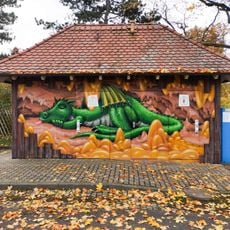
Local stories connect the cave to a dragon named Justus who lived near Syrau, and this creature remains central to how people speak about and name the place.
The cave lies 15 metres below the surface, and 350 of its 550 metres are open to visitors. Air, water and soil samples show a naturally high radon level, harmless on a short visit; guides undergo regular occupational health checks. Since 1990, ventilation has been changed and visitor numbers limited to curb mould and lichen growth.
The cave's best-known sinter formation is a 50-centimetre sinter curtain called "Gardine" (curtain). The round hole in its lower part comes from a pistol shot fired by a Soviet soldier. The cave is listed in the Saxon cave register as no. 5438 EG-07.
The community of curious travelers
AroundUs brings together thousands of curated places, local tips, and hidden gems, enriched daily by 93,999 contributors worldwide.