Todtnau Waterfall, Natural waterfall in Black Forest, Germany
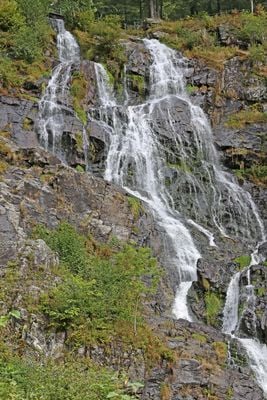
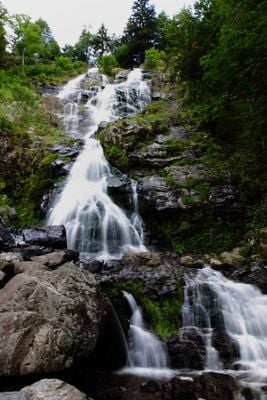
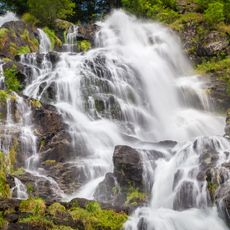
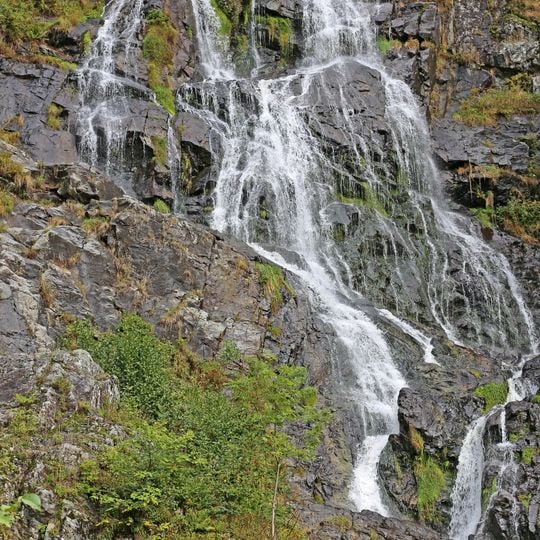
Todtnau Waterfall is formed by the Stübenbach stream, which drops 97 metres over five steps between Todtnauberg and Aftersteg. The highest single step is 60 metres, where the water fans over dark, blocky metatexite rock. Above and below the main fall, footbridges cross the stream, and moss and grass grow on the wet ledges beside the water.
The waterfall gained official protection status as a natural monument in 1987 under the German heritage preservation system. This designation ensured the long-term conservation of this forest cascade.
The waterfall's second name, Hangloch-Wasserfall, comes from a mine adit called Hangloch; silver ore was mined in this area until the 18th century, and the hillside is still crossed by tunnels. About 300 metres east of the upper step stands the Schatzstein, a monolith carved with marks that surveyors cut to record the position of the mines above the falls. On the path from Aftersteg, halfway to the falls, there is a Mariengrotte.
The path from Aftersteg to the foot of the falls was built barrier-free with support from the Southern Black Forest Nature Park. Parking is available in Todtnauberg and Aftersteg. The 450-metre Blackforestline suspension bridge, opened at Pentecost 2023, crosses about 120 metres above the valley floor and charges an entrance fee.
The waterfall's second name, Hangloch-Wasserfall, comes from a former silver mine: the Hangloch adit, one of the tunnels driven into this area for silver ore mining up to the 18th century. About 300 metres east of the upper step stands the Schatzstein, a monolith carved with markscheider signs whose meaning is still not fully understood.
The community of curious travelers
AroundUs brings together thousands of curated places, local tips, and hidden gems, enriched daily by 92,805 contributors worldwide.