Eduard-Müller-Krematorium, Modern architecture crematorium in Delstern, Germany
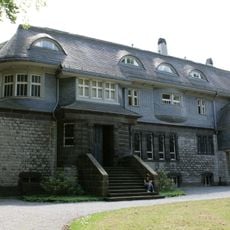
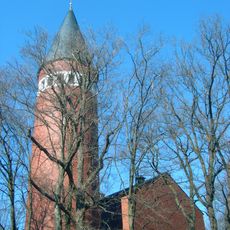
The Eduard-Müller-Krematorium displays a cubic structure with monumental design, featuring a forecourt supported by six pillars and a tower-shaped chimney. The building presents itself as a compact, geometrically defined construction with clear architectural lines.
The first design of 1905, a picturesque proposal, was rejected by Hagen's residents as unsuited to the sober modern idea of cremation. Peter Behrens then produced a plain, rectilinear building, erected from 1906 to 1908 on the slope of the Delstern cemetery and named after Eduard Müller, chairman of Hagen's cremation society. Completed in 1907, it could only open after cremation was legalised in 1911, and it was the first crematorium in Prussia.
The interior hall features an apse with gold mosaic by Emil Rudolf Weiss and a gallery housing organs for memorial services. These elements create a dignified setting that reflects the place's role as a venue for remembrance.
The facility features a modern farewell room redesigned in 2016 by architects Jutta Heinze and Giacomo Riggio for contemporary memorial services. Visitors encounter a thoughtfully designed space accommodating different styles of memorial gatherings.
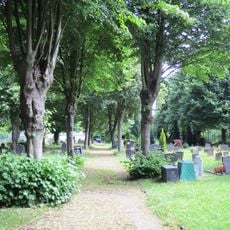
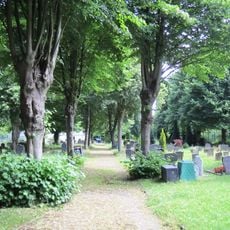
The Delstern cemetery around the crematorium holds the grave of painter Christian Rohlfs, marked by a plain stone by Ewald Mataré and a bronze of Christ teaching by Ernst Barlach. Honor graves of Hagen figures such as Jürgen von Manger and Eugen Richter lie nearby.
The community of curious travelers
AroundUs brings together thousands of curated places, local tips, and hidden gems, enriched daily by 94,488 contributors worldwide.