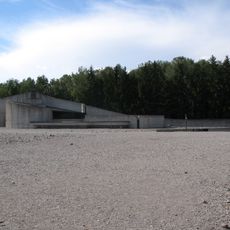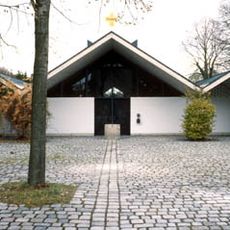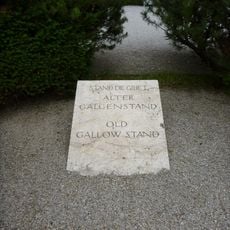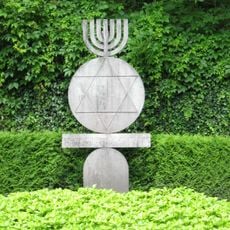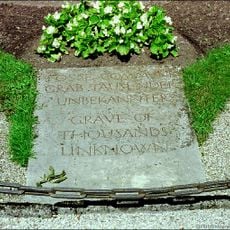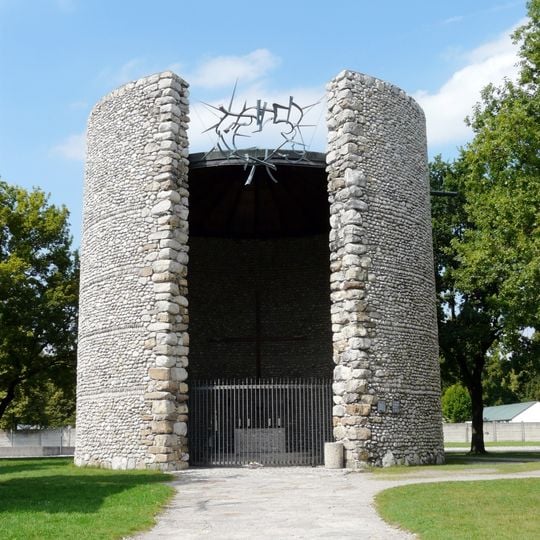
Todesangst-Christi-Kapelle, Roman Catholic chapel in Dachau, Germany.
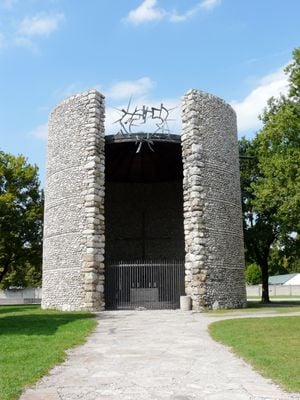
Todesangst-Christi-Kapelle is a modern chapel in Dachau with a round concrete structure whose walls are clad in uncut pebbles from the Isar River. The building opens toward the front, creating a powerful and solemn presence on the grounds.
The chapel was initiated by Bishop Johannes Neuhäusler, a former Dachau concentration camp prisoner who had it consecrated in 1960. The building arose from the need to create a memorial for the victims of the camp.
The name was chosen by Archbishop Joseph Cardinal Wendel to recall the "agony of death" that tens of thousands of inmates suffered day and night in the camp. On the exterior wall, a bronze relief titled "Christus in der Rast" was donated by formerly imprisoned Polish clergy and unveiled on 20 August 1972 by Bishop Kazimierz Majdański, himself a Dachau survivor. Its panel recounts the suffering of the 40,000 Polish prisoners, the largest group in the camp, in Polish, German, French and English.
The chapel stands at the vanishing point of the axis between the former camp barracks, with the entrance facing east and the bell frame west of it. The 3,000-kilogram bell is rung daily at 14:50 for prayer for the camp victims. The bronze memorial relief is on the exterior wall at the front of the chapel, not inside.
The bronze relief of Christ in Repose is on the exterior wall, not inside; it was made by sculptor Benedykt Tofil and funded by former Polish priest-prisoners. Unveiled on 20 August 1972 by Bishop Kazimierz Majdański, a Dachau survivor, it carries an inscription in Polish, German, French and English about the suffering of the 40,000 Polish inmates, the camp's largest prisoner group.
The community of curious travelers
AroundUs brings together thousands of curated places, local tips, and hidden gems, enriched daily by 92,804 contributors worldwide.