Schloss Eisenbach, Château in Lauterbach, Hesse, Germany
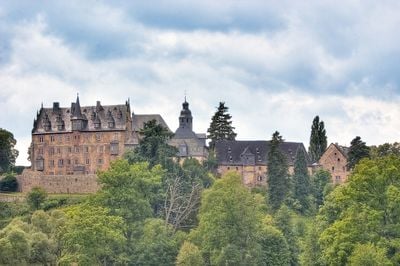
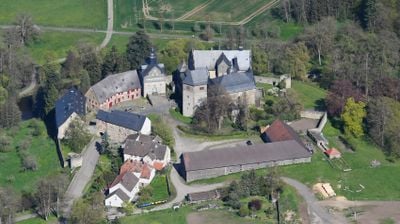
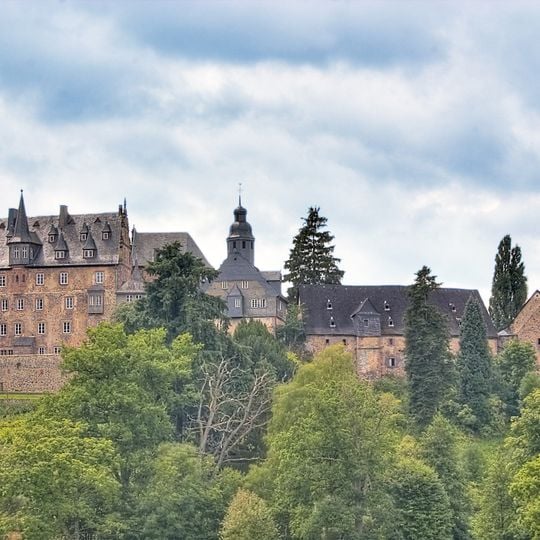
Schloss Eisenbach is a stone fortress on elevated ground in Lauterbach with medieval architectural elements and defensive structures visible throughout its design. The building displays characteristic features including gateways, walls, and chambers that reflect different construction periods.
Built around or before 1200 by the Counts of Ziegenhain as a road-guarding castle, Eisenbach was first documented in 1217 under Cunradus de Isenbach and destroyed in 1269 by Fulda's Prince-Abbot Bertho II of Leibolz. After the Eisenbach line died out in 1429, Hermann Riedesel, the "Golden Knight", received the fief; his descendants became hereditary marshals of Hesse in 1432 and still hold the castle.
The nickname "Wartburg of Upper Hesse" comes from Hermann IV. Riedesel zu Eisenbach, who adopted the Lutheran faith after meeting Philipp Melanchthon and introduced the Reformation in 1527. The castle chapel, built 1671–1675, was the first church in the area with a purely Protestant interior, including galleries on three sides and a carved pulpit-altar of 1674 by Kaspar Wiedemann.
The complex stands about 3.7 km south of Lauterbach and 1.8 km southeast of Frischborn, above the Eisenbach stream. The Vulkanradweg cycle path runs directly past the extensive castle park, which is freely accessible; the buildings themselves can be viewed from outside. A covered rest stop on the former Oberwaldbahn railway line sits at the foot of the site.
The gatehouse inscription records that the Riedesel, hereditary marshals of Hesse, have maintained the estate for 500 years. In the chapel, built 1671–1675, a carved pulpit-altar of 1674 by Kaspar Wiedemann shows the four Evangelists in its niches, with Christ crowning it.
The community of curious travelers
AroundUs brings together thousands of curated places, local tips, and hidden gems, enriched daily by 94,021 contributors worldwide.