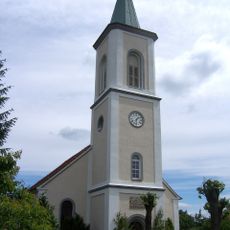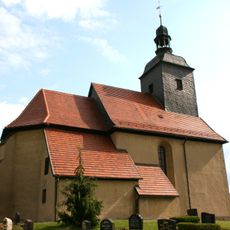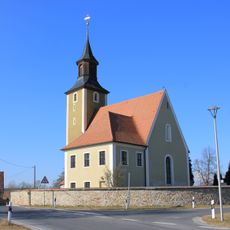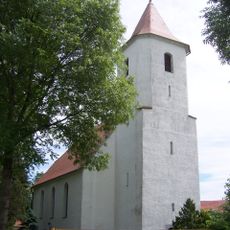
Hohe Dubra, Summit in Görlitz, Germany
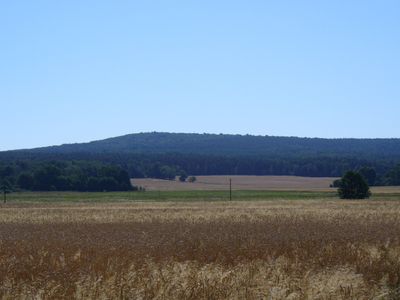
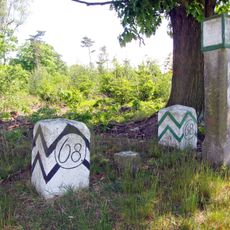
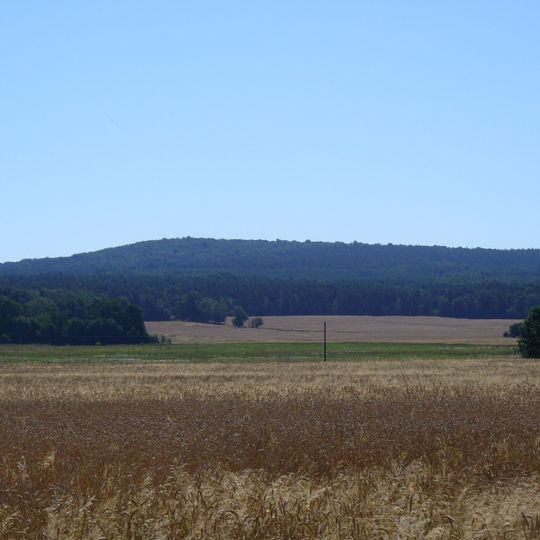
Hohe Dubrau is a hill in the district of Görlitz, Saxony, reaching 307 metres above sea level, the highest point of the Oberlausitzer Heide- und Teichgebiet natural region. Its summit exposes Precambrian greywacke and Ordovician Dubrau quartzite, surrounded by a 356-hectare nature reserve with pine-oak forest on the summit cliffs and oak-beech woodland on the slopes.
The name Hohe Dubrau derives from the Old Sorbian "dubrava", meaning oak forest, referring to the oaks that long dominated the ridge. The main summit reaches 307 m, making it the highest point of the Oberlausitzer Heide- und Teichgebiet natural region; the Kollmer Dubrau nearby reaches 303 m. Precambrian greywacke and Ordovician Dubrau quartzite outcrop at the summits.
The name comes from the Old Sorbian word "dubrava", meaning oak forest, a reference to the oaks that long dominated the ridge. The hill is also called Kollmer Höhen, and in Upper Sorbian Wysoka dubrawa; the Sorbian and German names sit side by side on maps of the Görlitz district.
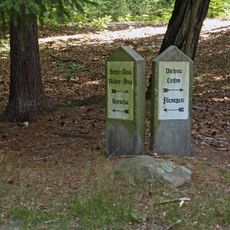
The Hohe Dubrau lies near the village of Hohendubrau in the Görlitz district, about 20 km northeast of Bautzen; the summit reaches 307 m, roughly 115 m above the surrounding land. The Kollmer Höhen and the Quitzdorf reservoir form one protected landscape, opened up by marked hiking and cycling trails laid out around the Monumentberg.
The name comes from the Old Sorbian word "dubrava", meaning oak forest, a reference to the oaks that long dominated the ridge. The summit itself is 307 m high, 115 m above the surrounding land, and lies about 19.8 km from Bautzen. Its slopes are protected as a 356-hectare nature reserve and Natura 2000 site.
The community of curious travelers
AroundUs brings together thousands of curated places, local tips, and hidden gems, enriched daily by 94,007 contributors worldwide.