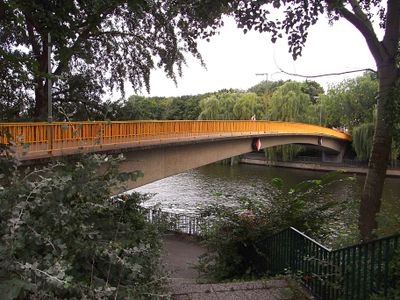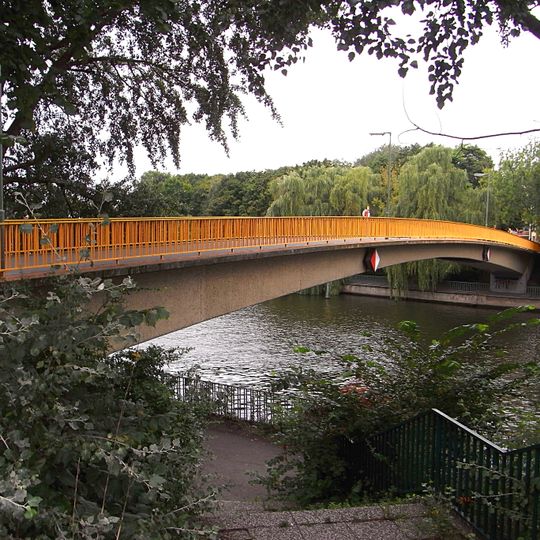
Wullenwebersteg, Steel arch footbridge in Moabit, Germany
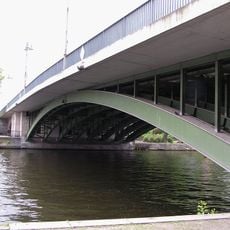
The Wullenwebersteg is a steel arch footbridge spanning the Spree River that connects Moabit with the Hansaviertel neighborhood. The structure uses a simple steel arch design that allows pedestrians to cross directly over the water.
The footbridge was built in 1957, replacing the earlier Achenbachbrücke from 1902 that had been destroyed during World War II. The new construction was part of the rebuilding effort in the war-damaged Berlin district.
The bridge was built as part of Berlin's postwar reconstruction and shows how the city deliberately connected pedestrian routes between residential areas. Today local residents use the crossing routinely without thinking about the planning behind it.
The footbridge sits between Hansabrücke and Gotzkowskybrücke and offers pedestrians a direct crossing over the Spree. The bridge is easily accessible on foot and takes only a few minutes to cross.
The name Wullenwebersteg refers to Wullenweberstraße, the street that runs on that side of the Spree. This connection to surrounding streets shows how Berlin's infrastructure is tied to local geography.
The community of curious travelers
AroundUs brings together thousands of curated places, local tips, and hidden gems, enriched daily by 92,784 contributors worldwide.