Felsenmeer, National geological site in Hemer, Germany
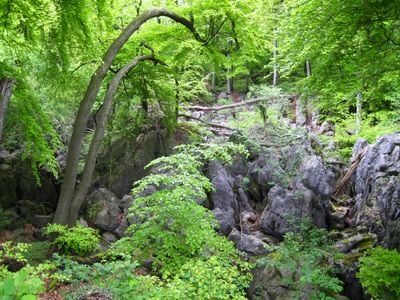
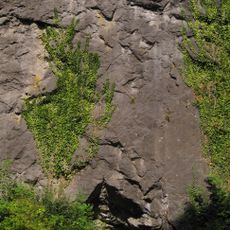
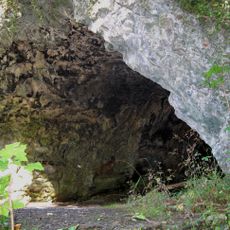
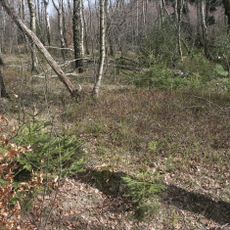
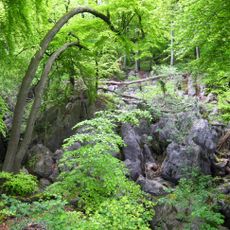
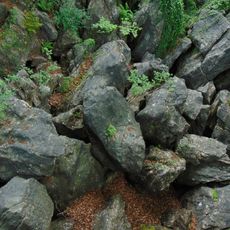
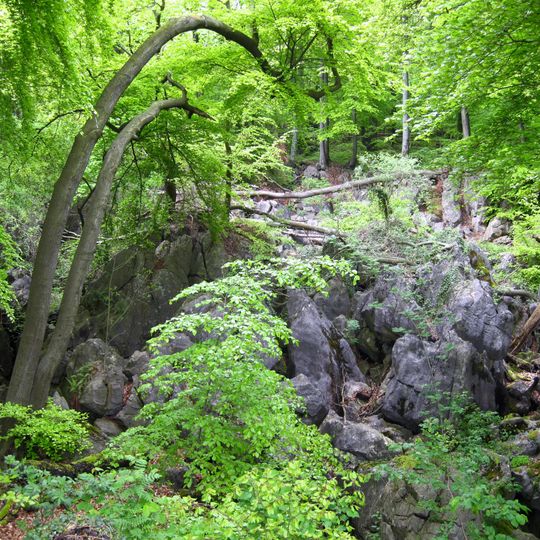
The Felsenmeer is a wooded geotope in Hemer covering about 35 hectares, roughly 600 metres long and 200 metres wide, rising 45 metres above the valley floor. It is divided into the Große Felsenmeer in the north-west, the Kleine Felsenmeer in the south and the Paradies in the south-east. Its surface is a cone karst of Middle Devonian reef limestone, with jagged rock pinnacles separated by deep clefts.
Iron ore was mined in the caves of the Felsenmeer from the 8th or 9th century AD, in the north-west and south-east of the area. This is the oldest ironstone mining proven in Westphalia; the ore, with an iron content of up to 80 percent, included metasomatic red ironstone, brown iron ore, zinc spar (calamine) and the rare green lead ore.
The local legend tells of dwarves who settled in the Sundwiger Wald and mined gold, silver and gemstones under the rocks, ruled by King Alberich. When giants came to plunder their rock castle, Alberich cast a spell that brought the hall's ceiling down on them, and the Felsenmeer is said to have lain there since. In the Paradies, a rock slab bearing a giant's image stands as his gravestone.
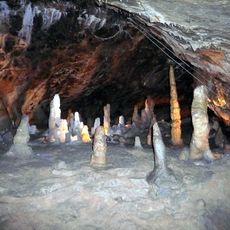
The Felsenmeer is freely accessible around the clock. Leaving the marked paths is forbidden and very dangerous, because crevices often lie hidden under leaves and branches; several fatal accidents have occurred this way. The nearby Heinrichshöhle, a dripstone cave, is open to visitors.
In 2005 the Geological Service of North Rhine-Westphalia rated the Hemer Felsenmeer a geotope without equal in Germany and awarded it the title "Significant Geological Monument of Germany"; on 12 May 2006 it became a National Geotope, one of only two such sites in the Sauerland alongside the Bruchhauser Steine.
The community of curious travelers
AroundUs brings together thousands of curated places, local tips, and hidden gems, enriched daily by 93,076 contributors worldwide.