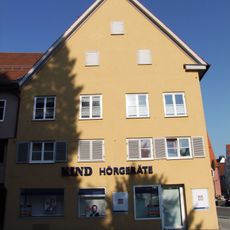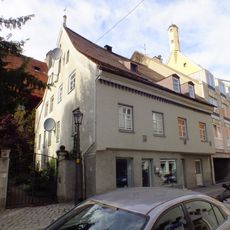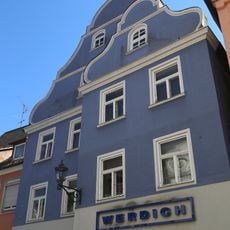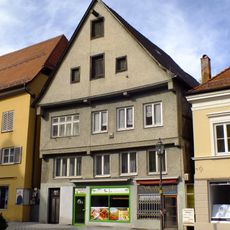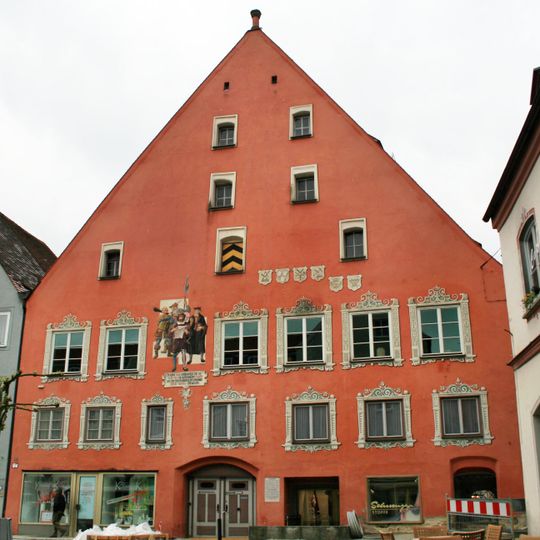
Kramerzunft, Guild hall in Memmingen, Germany
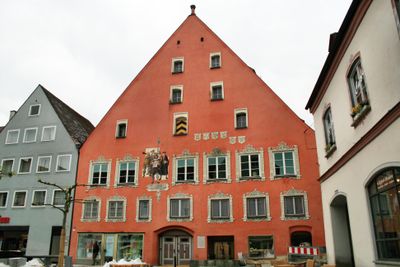
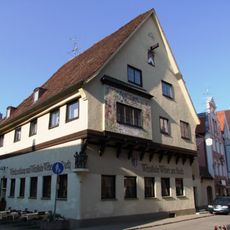
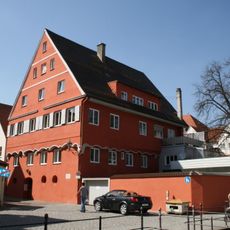
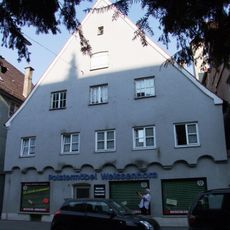
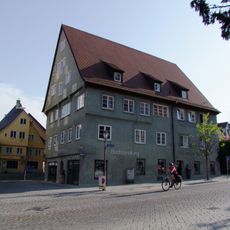
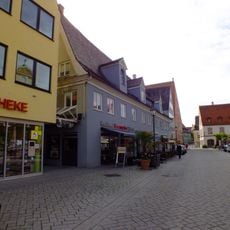
Kramerzunft is a three-storey building with a saddle roof, its core dating from the 15th century, standing free on three sides at Weinmarkt 15 and Kreuzstraße 15. On the west side, five segmental-arched blind panels group the two lower floors above a passage to the Stadtbach. The large hall on the second floor has a flat ceiling with profiled mouldings ending in fish-bladder motifs and carved tendrils in the spandrels.
The core of the three-storey house dates from the 15th century; it belonged to the artist Ivo Strigel from 1462 to 1478 and to the Kramer guild from 1479, which had a large hall built on the second floor in 1512. In 1525 the city made it available to the Upper Swabian peasant bands, who set down the Twelve Articles and the Federal Order there. After the guilds were abolished in 1803 it passed into private ownership, and in the 21st century the Kreishandwerkerschaft Memmingen bought and restored it, receiving the Bavarian monument protection medal in 2008. In 2020 the Bavarian Landtag named it one of the "Orte der Demokratie in Bayern".
The Kramerzunft takes its name from the Kramer guild, which owned the house from 1479 until the guilds were dissolved in 1803. In 1525 the city lent the building to the Upper Swabian peasant bands, who met here to set down the Twelve Articles and the Federal Order. Since 2020 the Bavarian state parliament has listed it as one of the "Places of Democracy in Bavaria".
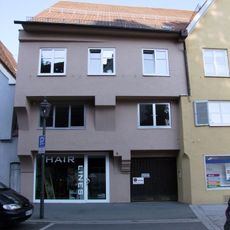
The Kramerzunft stands in the pedestrian zone of Memmingen's old town, with its north side on Weinmarkt and its south side on Kreuzstraße; the Memminger Aach, called Stadtbach inside the walls, runs directly along its west side. The ground floor holds retail shops, while the upper floors are used by the Kreishandwerkschaft Memmingen, so the 1512 hall is not a regular public exhibit. Approach from Roßmarkt, which the house closes off to the east.
The large hall on the second floor, installed by the guild in 1512, has a flat ceiling with profiled mouldings ending in fish-bladder motifs and spandrels carved with scrollwork. A wall projection on the south side carries a wall painting applied around 1512, showing bold scrolls, flowers and a blossom with a half-figure.
The community of curious travelers
AroundUs brings together thousands of curated places, local tips, and hidden gems, enriched daily by 94,610 contributors worldwide.