Schloss Wespenstein, Medieval château in Gräfenthal, Germany.
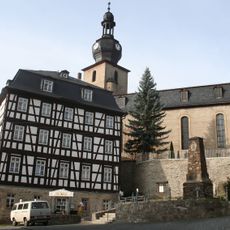
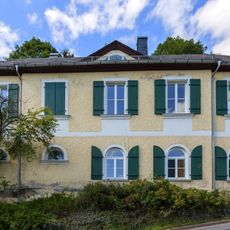
Schloss Wespenstein is a castle perched on a hill in Gräfenthal that once guarded a major trade and military route connecting Leipzig, Saalfeld, and Nuremberg. The building combines different architectural styles and now houses a restaurant, beer garden, and museum.
Built around 1250 by the Counts of Orlamünde as a toll house, the castle was first documented in 1337 as Hus Greventhal. In 1438 it passed to the Pappenheim marshals, who expanded it from 1517; Sebastian von Pappenheim hosted Martin Luther and Elector Johann in 1530, and his sons received Emperor Charles V and the Duke of Alba in 1547. A fire in 1686 destroyed much of it, and from 1829 to 1949 it served as a court.
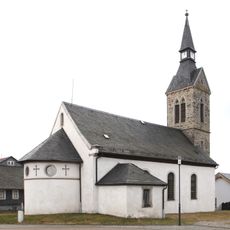
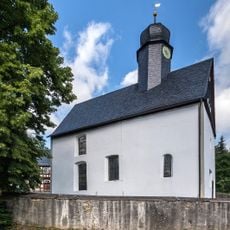
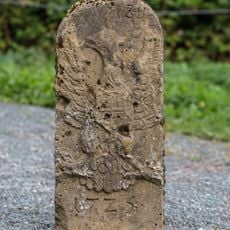
The castle chapel, where Martin Luther preached in 1530 when Sebastian von Pappenheim received him and Elector Johann, survives and has been restored. It is used for weddings and church services. Above the former main gate, the Pappenheim coat of arms from around 1530 is being conserved.
The castle stands on the border between Thuringia and Bavaria, on the pass of the old trade road from Leipzig to Nuremberg. The chapel where Luther preached is restored and used for weddings and services. The Amtsgebäude, the Fronfeste and a cistern survive; walls near the former main entrance and on the east side have largely collapsed, and rooms by the stair tower and the Amtmanngarten are filled with rubble.
The Pappenheim coat of arms above the former main gate, carved around 1530, is being conserved. The castle chapel where Martin Luther preached in 1530 survives and is used for weddings and services. Many rooms by the stair tower and the steward's garden are filled with rubble, and their former purpose is partly unknown.
The community of curious travelers
AroundUs brings together thousands of curated places, local tips, and hidden gems, enriched daily by 92,840 contributors worldwide.