Steinkiste von Calden, Neolithic burial site in Calden, Germany.
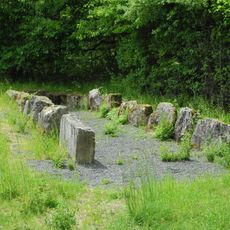
The Steinkiste von Calden is a prehistoric burial chamber made of stone slabs in northern Hesse. The chamber consists of large carefully positioned stones that form a rectangular grave structure that has survived thousands of years.
The gallery grave Calden I dates to the late Neolithic, around 2000–1500 BCE, and lies between the Wartberg culture centres near Fritzlar and Warburg. A large erratic boulder was ploughed up in 1947; Otto Uenze examined the site in 1948, and new excavations followed from 1988 within the Calden project. The grave was disturbed in the Roman imperial period and the Middle Ages.
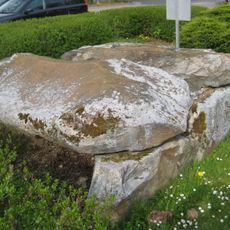
The tomb is a Galeriegrab of the Züschen type, with about 20 wall stones of Tertiary quartzite and some 10 capstones; the end stone was set back about 1.2 m between jambs, pointing to an entrance in the form of a Seelenloch. A gap between wall slabs was filled with dry limestone masonry, and the floor was stamped like a clay threshing floor. Two rare capstones were re-erected opposite the Calden school.
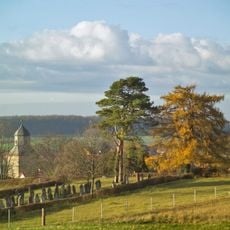
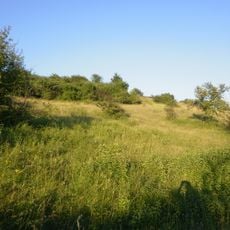
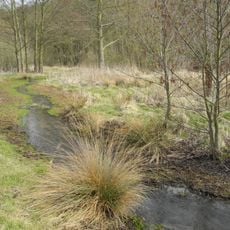
The gallery grave lies south of Calden in a small valley beside two springs, near the source of the Calde stream. Only a few quartzite stones survive in place; two rare capstones were re-erected opposite the Calden comprehensive school at the southern edge of the village. The site is reached on foot and is not a reconstructed chamber.
Archaeological investigation revealed that the burial chamber held at least forty individuals whose remains were arranged in an organized pattern. This arrangement suggests that early inhabitants of this area practiced systematic and thoughtful burial rituals.
The community of curious travelers
AroundUs brings together thousands of curated places, local tips, and hidden gems, enriched daily by 94,534 contributors worldwide.