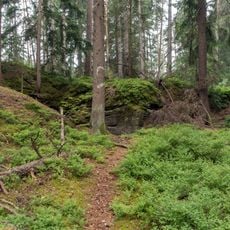
Gefütterter Graben bei Ungelstetten, Archaeological canal structure in Winkelhaid, Germany
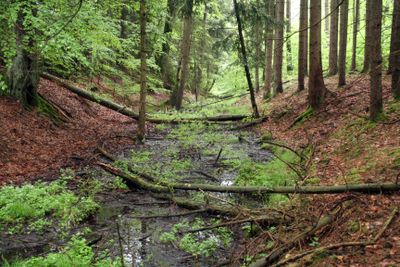
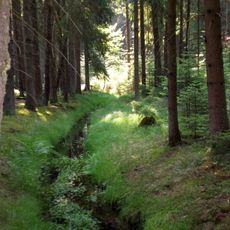
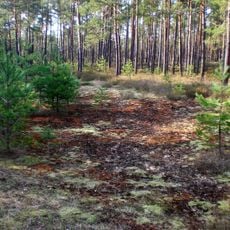
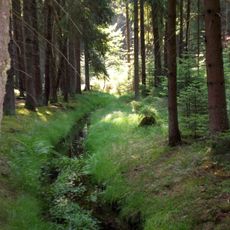
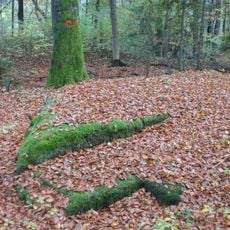
The Gefütterter Graben near Ungelstetten is the surviving section of a medieval canal project: a straight, clay-lined ditch about 1.5 km long, running west from near the Röthenbach, with visible earthen banks and a depression that sometimes holds water. The A3 motorway now cuts across its course.
In 1388 Andres Pfintzing, Ulrich Haller and Albrecht Ebner began planning to divert the Röthenbach into the Fischbach, which supplied Nuremberg's tanners, dyers, launderers and butchers. Work was taken up around 1423 and 1425 by Hans Velber of Ulm, who cut a canal about 1.5 km long running almost straight west from near the Röthenbach. It was probably abandoned by the First Margrave War of 1449; in 1480 the council examined three routes, and on 13 July 1482 shelved the project as too costly and risky. A 1585 revival failed over a dam of about 9 m that would have flooded back to Ungelstetten.
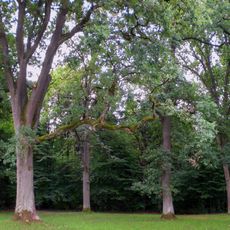
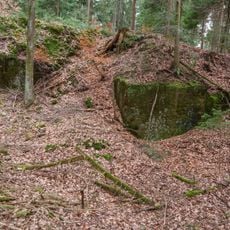
The name Gefütterter Graben refers to the clay lining that was meant to stop water from seeping away. The ditch was planned to connect the Röthenbach with the springs of the Fischbach, but it never carried water to Nuremberg. Today a hollow that sometimes holds water and earthen walls remain in the forest.
The site is accessible year-round via the Rotpunkt hiking trail starting from the road connecting Ungelstetten and Brunn. Wear sturdy footwear and follow the marked trails to explore the full extent of the canal and its structures.
The name comes from its clay lining, an innovative waterproofing solution still visible today. This early sealing technique shows how carefully medieval engineers designed water systems.
The community of curious travelers
AroundUs brings together thousands of curated places, local tips, and hidden gems, enriched daily by 94,433 contributors worldwide.