Großsteingrab Stöckheim, Neolithic dolmen in Rohrberg, Germany
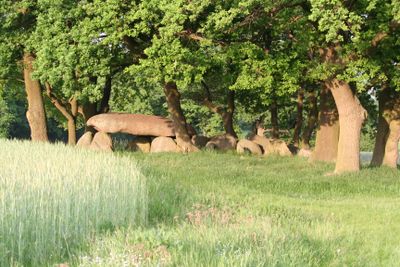
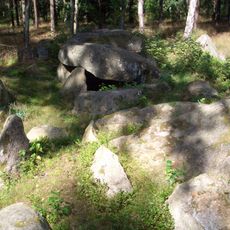
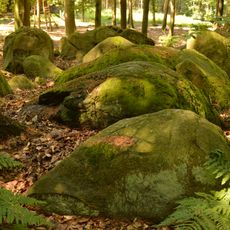
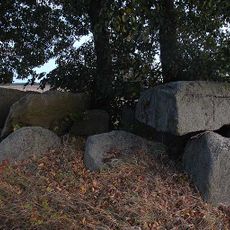
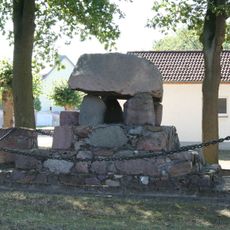
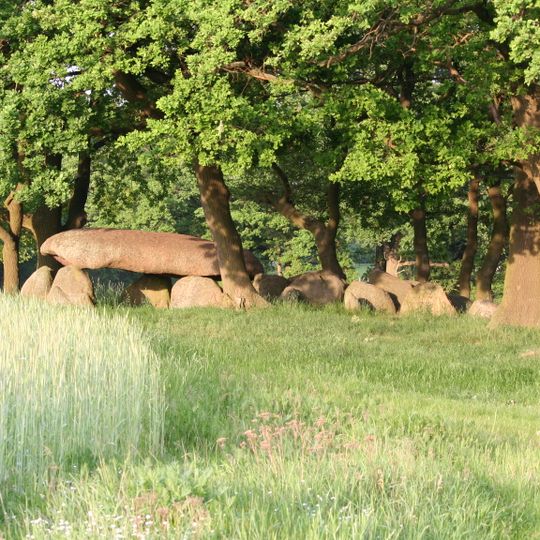
Großsteingrab Stöckheim is a megalithic burial chamber from the Neolithic period located near Rohrberg, built from large stone blocks arranged in a specific pattern. The structure combines upright supports with horizontal covering stones to create an enclosed space for the dead.
This tomb dates to the Funnel Beaker culture and was built around 5000 years ago, when northern German communities erected large stone chambers for burial purposes. Scientific study began in the 1800s and has continued to provide insights into construction methods and the people buried within.
The structure reflects burial practices from the Neolithic period when communities built stone chambers to honor their dead. Such tombs served as permanent gathering places for remembering those who had passed away.
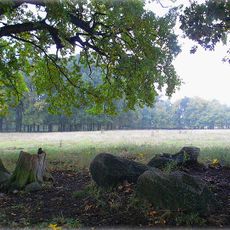
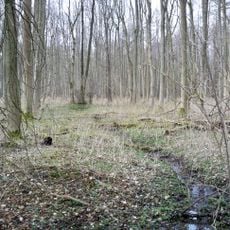
The site sits in a rural setting south of Stöckheim village and can be reached by walking through fields and along local paths. Good visibility of the structure is easiest during seasons when vegetation is thinner around the stone blocks.
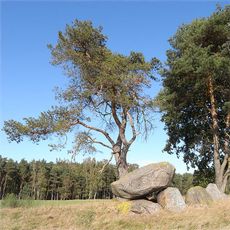
One of the largest preserved covering stones in the Altmark region still sits atop this burial chamber, showing how ancient people managed to transport and place enormous rocks. The fact that these massive stones have remained in place for thousands of years demonstrates the engineering skill of Neolithic builders.
The community of curious travelers
AroundUs brings together thousands of curated places, local tips, and hidden gems, enriched daily by 91,136 contributors worldwide.