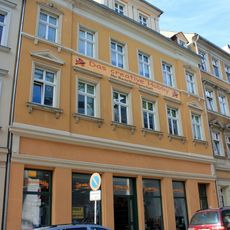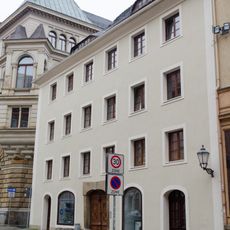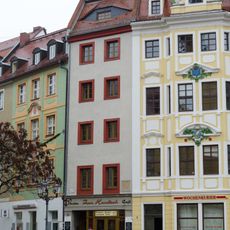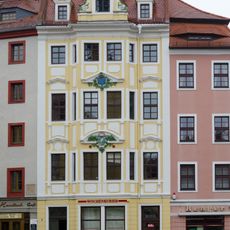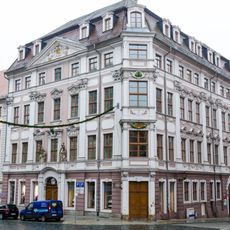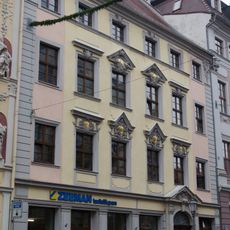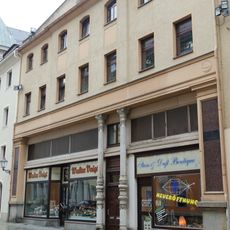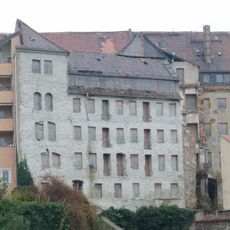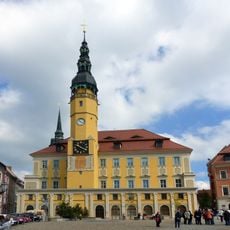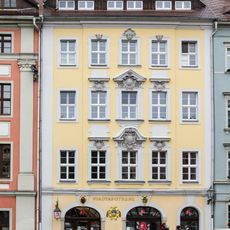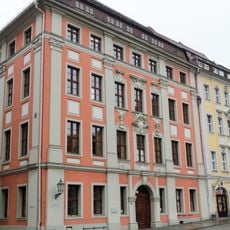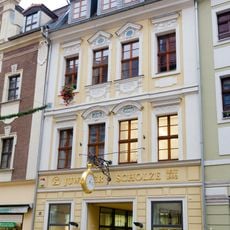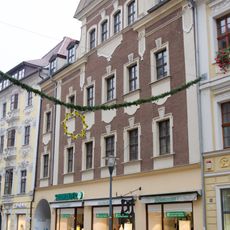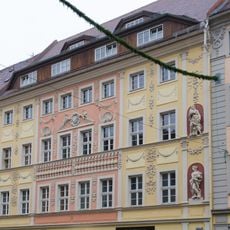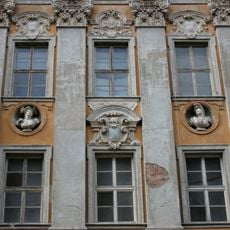
Gewandhaus, Medieval town hall in Bautzen, Germany
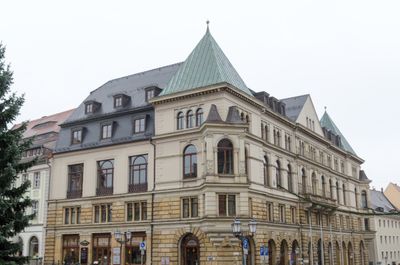
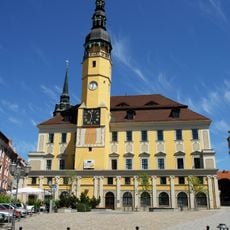
The Gewandhaus is the town hall of Bautzen and displays late Gothic architecture with its stone walls and detailed windows. The building has a rectangular layout and houses multiple chambers inside, where you can see historical administrative rooms.
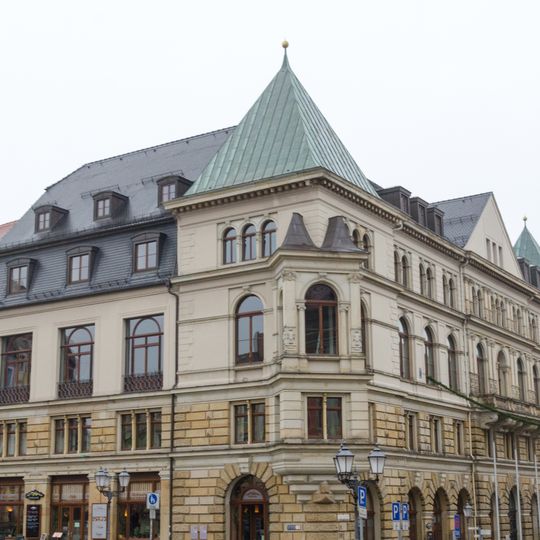
In 1284 the Brandenburg margraves Otto IV and Conrad I granted Bautzen the right to build a Kaufhaus, the first in Upper Lusatia, for 10 marks of Stendal silver. A larger Kaufhaus with a public weigh-house and wine cellar was built on Innere Lauenstraße between 1472 and 1482. Fire destroyed it in 1634 and again in 1709; it was rebuilt in 1666/1667 and 1710, then replaced in 1882–1883 by a Neo-Renaissance design from Dresden architects Ernst Giese and Paul Weidner, keeping the late Gothic Ratskeller beneath.
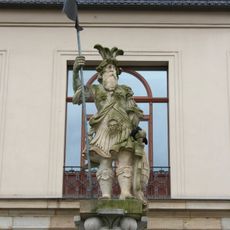
The Sorbian name Kupnica, or sukelnica, links the building to the cloth trade that gave it its name. The Marktbrunnen with the knight Dutschmann stands in front of the house. Today the building houses parts of the city administration, including the Standesamt, and a restaurant.
The Gewandhaus stands on the south side of the Hauptmarkt, directly facing the Rathaus, with the Marktbrunnen and its Ritter Dutschmann in front of it. Parts of the building house the city administration, including the Standesamt, as well as a restaurant. The late Gothic Ratskeller beneath the neo-Renaissance building survives, its star vault carried by a single octagonal granite pillar.
The late Gothic Ratskeller survives beneath the 1882–83 neo-Renaissance building, its star vault resting on a single octagonal granite pillar. A 1976 fire destroyed Georg Schwenk's painting of the 1429 Bürgerwehr repelling the Hussites, and the present gable dates from the rebuilding.
The community of curious travelers
AroundUs brings together thousands of curated places, local tips, and hidden gems, enriched daily by 94,582 contributors worldwide.