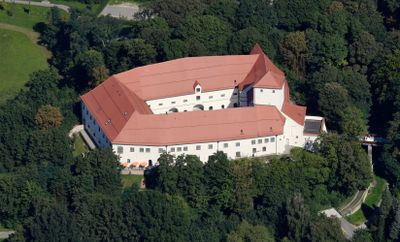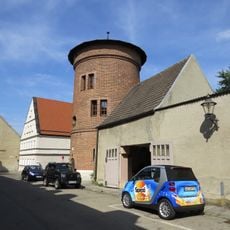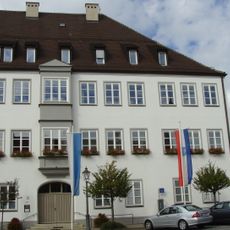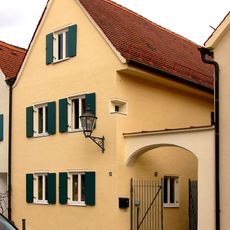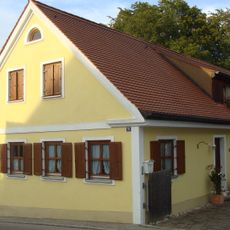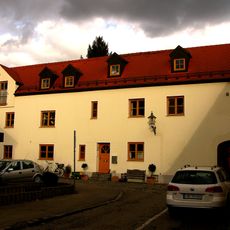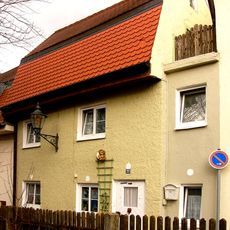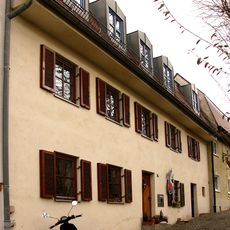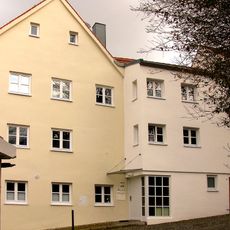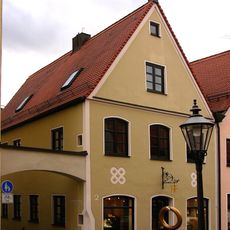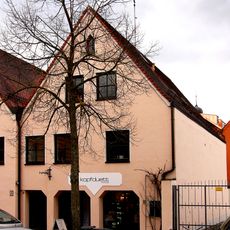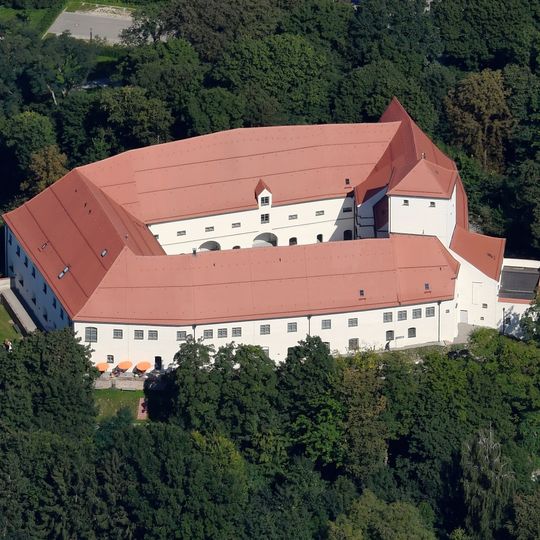
Schloss Friedberg, Castle and architectural heritage monument in Friedberg, Germany.
Schloss Friedberg is a fortified complex with defensive towers, multiple courtyards, and a large ceremonial hall for events. The structure combines medieval defensive elements with later renovations to form a varied building complex.
Duke Ludwig II the Strict built the castle in 1257 to guard the Bavarian customs station on the border with Augsburg. A fire in 1541 destroyed much of it, and it was rebuilt in Renaissance forms to a design by Jörg Stern, with Narziß Krebs as site manager. From 1567 to 1575 it served as the widow's residence of Duchess Christina of Lorraine. After a three-year renovation costing 23 million euros, it reopened in 2019 with the museum moved to the south wing.
The museum in the south wing, reopened in May 2019, displays Friedberg clocks and faience, archaeological finds, sacred art and works by local artists. From 1754 to 1768 a faience manufactory occupied the castle rooms, and from 1567 to 1575 Duchess Christina of Lorraine lived here as a widow, briefly making Friedberg a centre of court life.
The castle sits in the city center and is easy to reach on foot, with parking available nearby. Events happen regularly throughout the week and weekends, so visiting at different times offers different experiences.
The deep neck ditch in front of the castle may point to an early medieval predecessor, possibly a Hungarian-period refuge fort; similar earthworks lie between Thierhaupten and Mering on the Lechrain. Older literature even considered a Roman watchpost on the hill. The ditch is best seen from the modern bridge.
The community of curious travelers
AroundUs brings together thousands of curated places, local tips, and hidden gems, enriched daily by 94,322 contributors worldwide.