Schloss Starnberg, Medieval castle turned administrative building in Starnberg, Germany
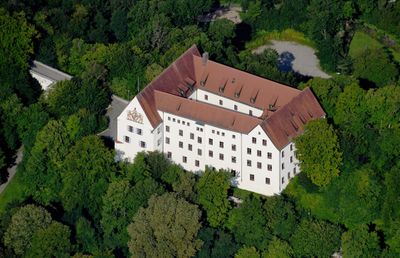
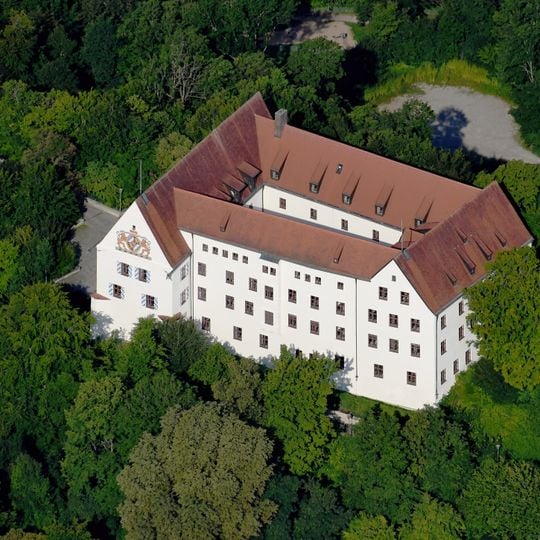
Schloss Starnberg is a four-wing building with steep gables on a long moraine ridge above Starnberg and Lake Starnberg. It was rebuilt in the early modern period from a high medieval castle; the medieval castle was demolished in 1541 under Duke Wilhelm IV and replaced by a Renaissance residential and defensive structure. Since 1969–1972 the interior has been completely gutted and rebuilt; today it serves as the Starnberg tax office.
The fortification was first documented in 1244 and came under Wittelsbach control in 1248 when the family seized regional power. It underwent major transformation into a princely residence during the Renaissance in the 16th century.
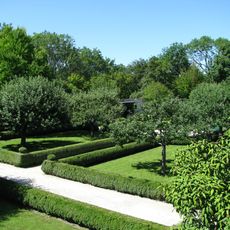
The name Starnberg is first recorded in 1244 as "Starnberch Castrum". From 1663, a ceremonial ship modelled on the Venetian Bucentaur, built by Santurini, sailed on Lake Starnberg during the summer residence of Elector Ferdinand Maria. Today the building serves as the Starnberg tax office, and the freely accessible castle garden has been laid out in baroque style again since 1979.
The castle now houses the Starnberg Tax Office, though its garden remains open to the public with benches overlooking the lake. Visitors should know that only outdoor areas are freely accessible, as the building interiors serve office functions.
Schloss Starnberg was first recorded in 1244 as "Starnberch Castrum"; a Wernher Miles de Starnberk appears in a charter as early as 1208. In 1395 the later Duke Ernst pledged the castle to his future wife Elisabeth Visconti as a morning gift, together with her dowry of 75,000 guilders brought from Milan.
The community of curious travelers
AroundUs brings together thousands of curated places, local tips, and hidden gems, enriched daily by 92,854 contributors worldwide.