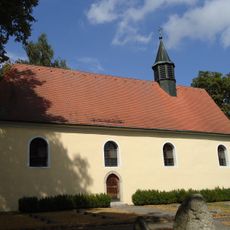
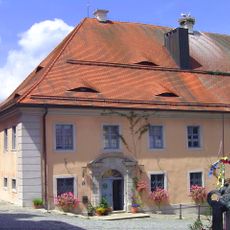
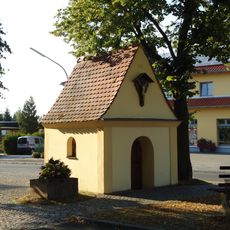
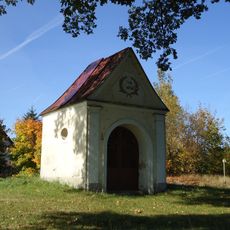
Tirschenreuther Teichpfanne, Lake system in Tirschenreuth district, Bavaria, Germany.
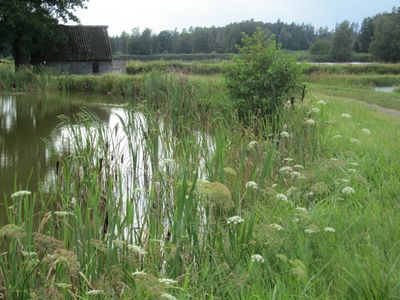
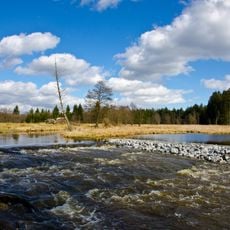
Tirschenreuther Teichpfanne is a pond area in the triangle between Tirschenreuth, Mitterteich and Wiesau in the Tirschenreuth district, Upper Palatinate. Its ponds, mostly created in the Middle Ages, are separated by earthen dams and are usually only one to two metres deep; some ponds with peaty beds and disused clay pits near Wiesau reach 10 to 15 metres. The largest include Paulusschwamm (17 ha), Kornthaner Weiher (16 ha) and Rothenbürger Weiher (16 ha).
Most ponds in the Tirschenreuther Teichpfanne were created in the Middle Ages, many on the initiative of the Cistercian monastery of Waldsassen, which itself held only about 160 ponds. Farmers, townspeople and officials dug most of the rest. The monastery's ponds were gradually privatised after secularisation in 1803. Around 1200 Tirschenreuth laid out two town ponds of 90 and 97 hectares, drained in 1808.
The region maintains traditional carp farming as a living practice that shapes how people work the land. You see evidence of this craft everywhere in how the shallow ponds are managed and used by local fish farmers who continue this work today.
You can explore the pond landscape through marked walking trails that connect different areas of the system. A former railway line has been converted into a cycling path that provides an easy way to see the whole area.
The two town ponds of Tirschenreuth, dug around 1200 and drained in 1808, covered 90 and 97 hectares, far larger than any pond left today; the biggest surviving ones, such as the 17-hectare Paulusschwamm, reach only a fraction of that. The 28.4 km Vizinalbahn cycle path on the disused Wiesau–Bärnau railway line crosses the southern pond basin.
The community of curious travelers
AroundUs brings together thousands of curated places, local tips, and hidden gems, enriched daily by 94,641 contributors worldwide.