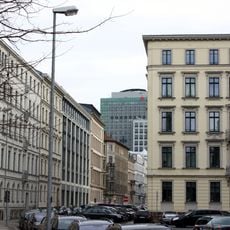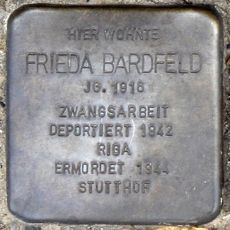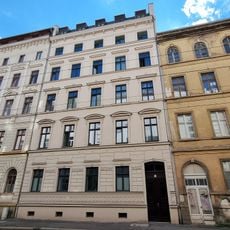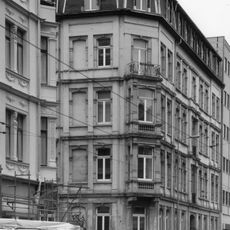
Kongresshalle Leipzig, Concert hall and multi-purpose venue near Leipzig Zoo, Germany
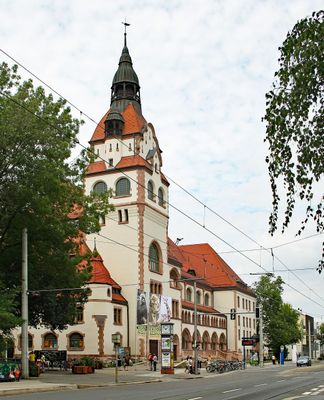
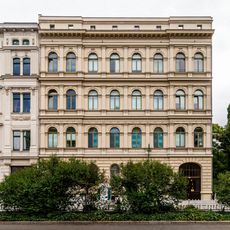
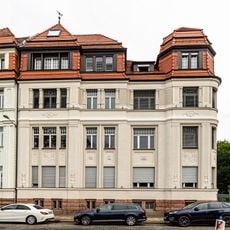
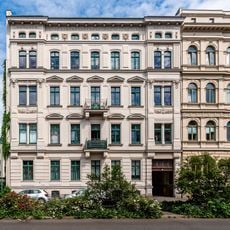
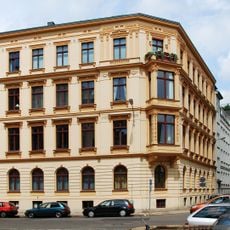
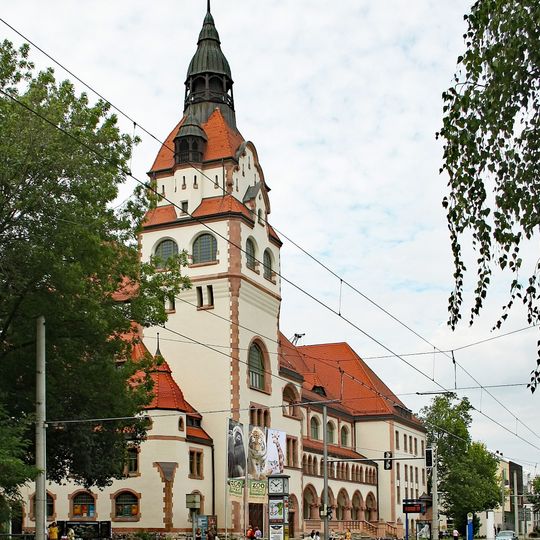
Kongresshalle Leipzig is a Jugendstil event building designed by architect Heinrich Rust, with a 77-metre frontage on Pfaffendorfer Straße and a 50-metre tower. Its halls opened in 1900 under names such as Großer Saal, Weißer Saal, Terrassensaal and Pfauensaal; the foyer ceiling is counted among Leipzig's notable Art Deco examples. The Großer Saal held one of Europe's largest swinging dance floors, built in layers with cavities.
Leipzig merchants initiated the Gesellschaftshaus, designed by Heinrich Rust and opened on 29 September 1900 after delays. From 1946 to 1981 the Gewandhaus Orchestra performed in the Great Hall under conductors Franz Konwitschny, Václav Neumann and Kurt Masur. The Weiße Saal housed the Theater der Jungen Welt from 1946 to 1989, and on 20 June 1968 a protest poster against the University Church demolition was unfurled here.
The hall hosts concerts and exhibitions today, drawing people together in spaces that carry the names of historical salons like the Great Hall and Peacock Hall. These gatherings continue a tradition that connects visitors to the venue's role as a social meeting place over many decades.
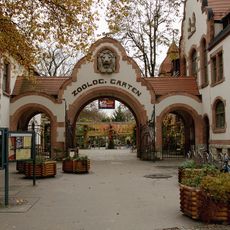
The venue is located near Leipzig Zoo and is easily accessible by public transport. The interior spaces are flexible and can be arranged differently depending on the type of event being held.
The claim that the building served as a military hospital in World War I is often repeated but cannot be documented and is considered unlikely. More certain is the protest of 20 June 1968: at the closing concert of the International Johann Sebastian Bach Competition, participants unfurled a poster demanding the reconstruction of the University Church, which had just been blown up.
The community of curious travelers
AroundUs brings together thousands of curated places, local tips, and hidden gems, enriched daily by 94,540 contributors worldwide.