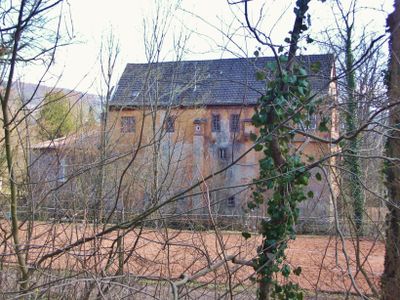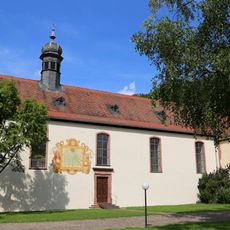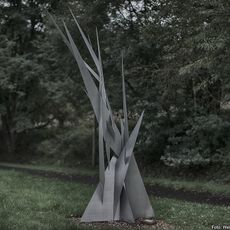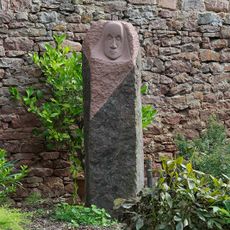
Wasserschloss Sommerau, Architectural heritage monument in Eschau, Germany.
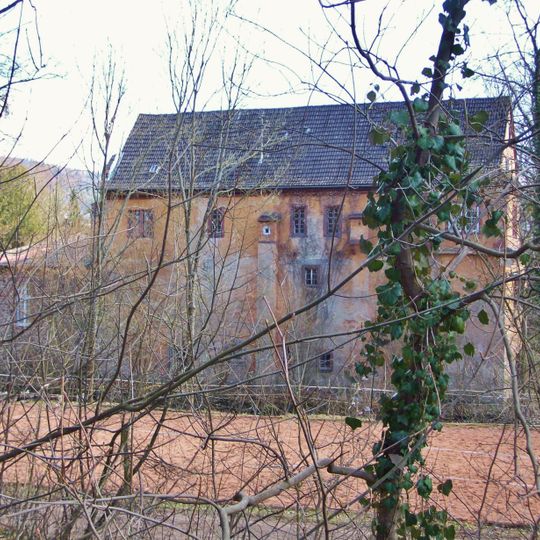
Wasserschloss is a fortified complex along the Elsava River featuring multiple buildings arranged around inner courtyards with walls and passages connecting them. The structure combines thick stone construction with watchtowers, defensive embankments, and channels that direct water through and around the site.
Built after 1271 as a counter-fortress by the Archbishop of Mainz against the Counts of Rieneck at Eschau, the castle was enfeoffed to the Kottwitz family. In 1365 it was divided between the Kottwitz and Fechenbach families, who held it jointly until 1550. Peasants under Jakob Hock stormed and burned it on 2 May 1525 during the German Peasants' War; after destruction in the Thirty Years' War, the surviving Renaissance wing was built in 1650, retaining the keep and moat.
The name itself describes the water-based design that shapes how visitors move through and perceive the complex today. The arrangement of buildings and courtyards reflects how this place served as both a governing center and a defensive stronghold for centuries.
The complex stands in Sommerau, on the Elsava opposite Eschau, and is reached from the road running through the village. The grounds are private: since 2004 the architect Wilfried Stendel has owned the castle and begun restoring it and planning housing in the park. View it from the public lane outside; the interior is not open.
The castle's name recalls the Spessart legend of 2 May 1525, when rebels led by Jakob Hock from the Sommerauer Hesselsmühle are said to have stormed and burned the castle during the Peasants' War. The tale was written down by the Eschau pastor Karl Heinrich Caspari and the Miltenberg chronicler Michael Joseph Wirth, and later retold by Valentin Pfeifer.
The community of curious travelers
AroundUs brings together thousands of curated places, local tips, and hidden gems, enriched daily by 95,107 contributors worldwide.