Schloss Rentweinsdorf, Royal palace in Rentweinsdorf, Bavaria, Germany.
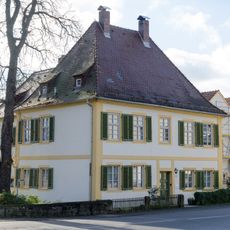
Schloss Rentweinsdorf is a three-winged Rococo palace with light-colored stone facades and a central hall featuring refined stucco decorations inside. The grounds include a landscaped park with open lawns, tree groupings, and a baroque building designed to shelter orange trees during winter.
The Rotenhan family is documented at Rentweinsdorf after Wolfram von Rotenhan's second enfeoffment by Würzburg on 23 November 1333, shortly after the bishopric destroyed their ancestral castle. A smaller fortified moated seat on the village edge was enlarged over centuries; a 1530 Burgfrieden regulated the branches sharing it. Damaged in the Peasants' War of 1525 and devastated again in the Thirty Years' War, it was rebuilt from about 1750 on the old foundations and finished in 1762.
The von Rotenhan family's continuous presence shapes the character of the residence as a lived-in noble home rather than a museum piece. This ongoing connection between ancestral tradition and present-day life defines the place's character in the Haßberge region.
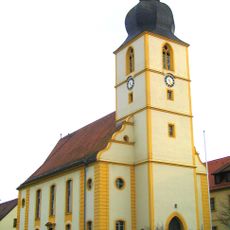
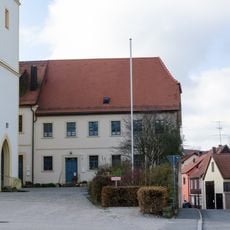
The palace is a private residence and cannot be visited; the family still lives in it. Visitors can view the three-winged building and the opposite parish church from the Schlossplatz and public paths. The baroque orangery in the park is one of the few surviving 18th-century greenhouses in Bavaria.
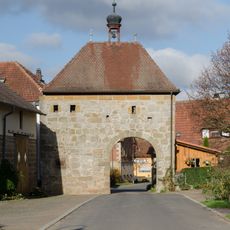
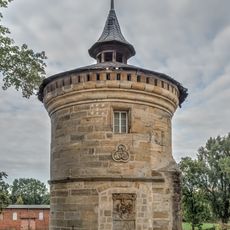
The round two-storey tower north of the palace, often taken for a remnant of the old castle, was only added in 1880 and recalls the town towers of Nuremberg. The baroque orangery in the park is one of the few surviving 18th-century greenhouses in Bavaria.
The community of curious travelers
AroundUs brings together thousands of curated places, local tips, and hidden gems, enriched daily by 94,010 contributors worldwide.