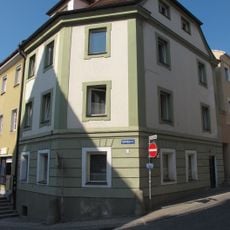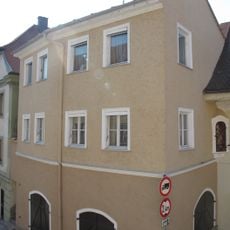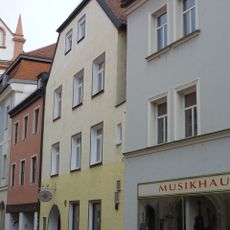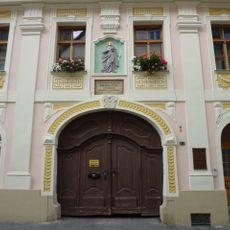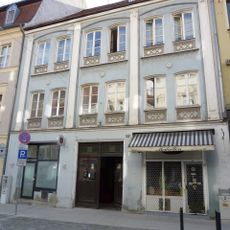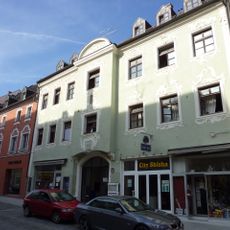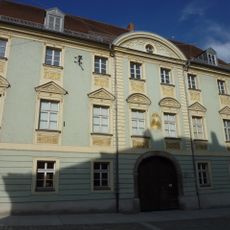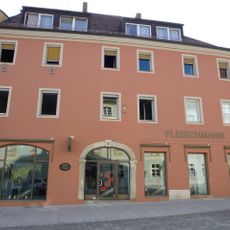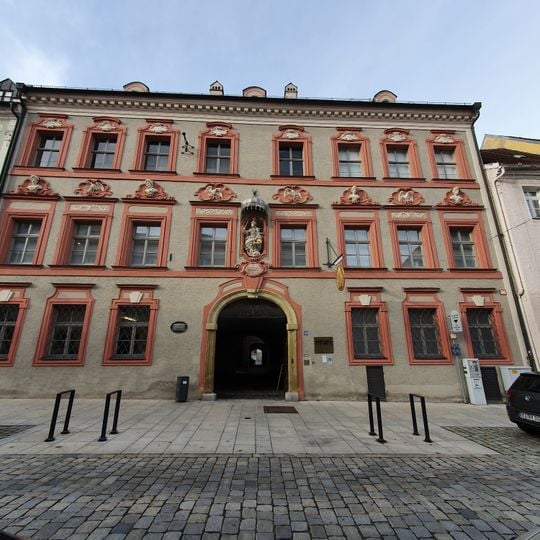
Gäubodenmuseum Straubing, Regional museum in Straubing, Germany.
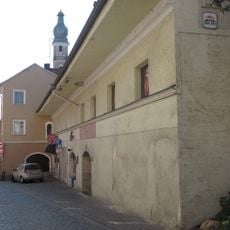
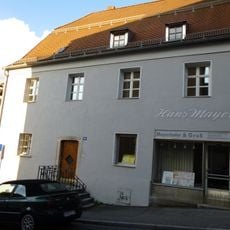
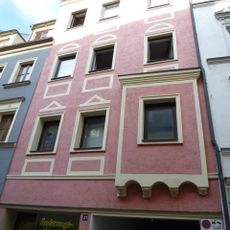
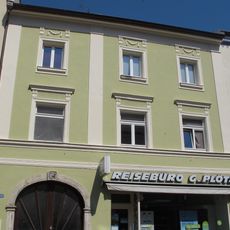
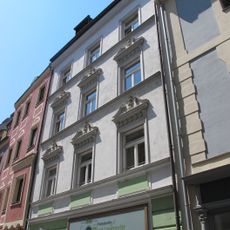
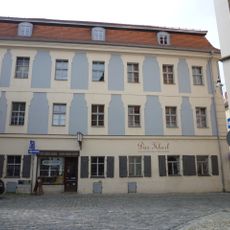
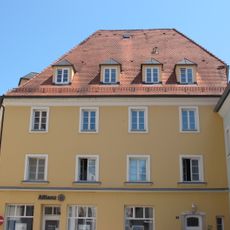
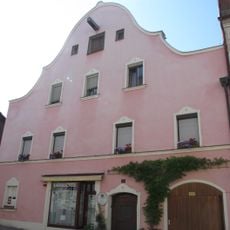
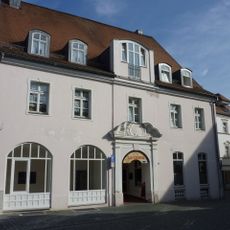
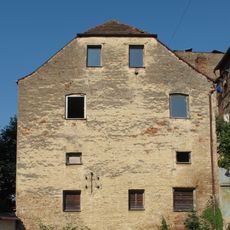
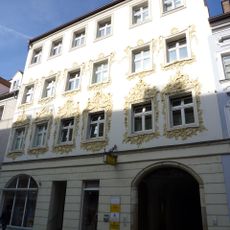
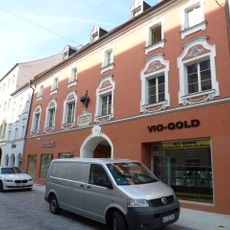
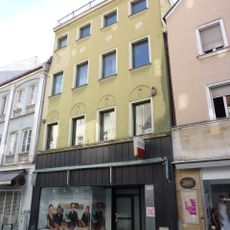
The Gäubodenmuseum is a regional museum in a reconstructed patrician house on Fraunhoferstraße in Straubing that displays finds and artwork spanning 7000 years. The collection is organized into multiple departments with objects ranging from prehistoric times to the modern era.
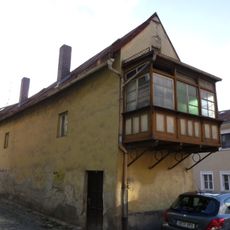
The collection began in 1845 with unusable items from the city armory, made public in the Pulverturm. In 1880 Eduard Wimmer opened the Stadtturm as a historical collection, and the 1898 founding of the Historical Association for Straubing and Surroundings gave it new impetus. Space shortages led to its move to Fraunhoferstraße 9 in 1908; it received its current name at its reopening in 1938, and in 1976 the adjacent house at Fraunhoferstraße 11 was acquired.
The museum's name comes from the Gäuboden, the fertile plain around Straubing. Its departments cover prehistory from the Neolithic to the Celts, the Roman era, the early Bavarians, the Middle Ages, the Counter-Reformation and sacred art. Since 2018 the interactive "Baiern gefunden!" section has used around 1,500 grave inventories from the 5th to 8th centuries to trace early Bavarian history.
The building is located in downtown Straubing and is easily accessible on foot, though wheelchair access is limited in some areas. Audio guides are available on-site to help visitors understand the collections.
The museum's centerpiece is the Straubing Roman Treasure, found in 1950 during construction work: a copper cauldron holding several Roman parade armors with bronze face-mask helmets. It is considered one of the most important Roman finds in Germany and was likely buried in the 3rd century to hide it from plundering Alemanni.
The community of curious travelers
AroundUs brings together thousands of curated places, local tips, and hidden gems, enriched daily by 94,356 contributors worldwide.