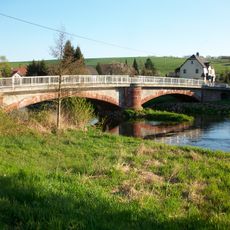
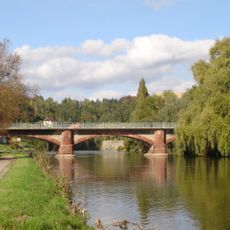
Göhrener Viadukt, Railway viaduct in Wechselburg and Lunzenau, Germany.
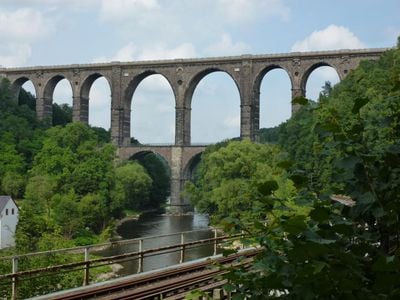
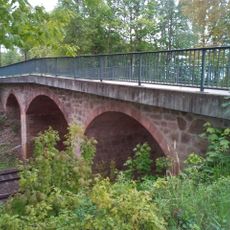
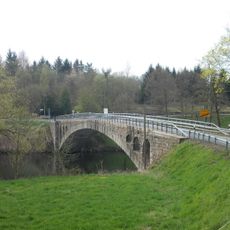
The Göhrener Viadukt is a stone railway viaduct over the Zwickauer Mulde valley between Wechselburg and Lunzenau, 297 m long and 68 m high, partly built in two tiers. Its largest arch has a clear span of 16 m, and the masonry volume is 55,514 m³. Beneath it run the disused Muldentalbahn line on the east bank and the road from Göhren to Altzschillen on the west bank.
The foundation stone of the Göhrener Viadukt was laid on 27 May 1869 and the bridge was finished in June 1871 for the Neukieritzsch–Chemnitz railway. Engineers Clauß, who also built the Hetzdorfer Viadukt, and E. Bake directed the work, which began with 4,000 to 5,000 labourers, among them 1,000 masons, mostly Italians. The cost reached 1.2 million Taler, and two plaques on the bridge commemorate the engineers.
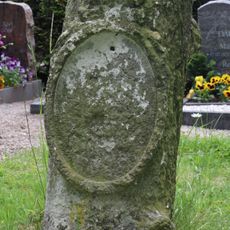
Two plaques at the top of the bridge commemorate its builders, the engineers Clauß, who also built the Hetzdorfer Viadukt, and E. Bake. Around 4,000 to 5,000 workers took part in construction, including 1,000 masons who were mostly Italians, and 340 horses hauled the building materials to the site.
You can view the viaduct from several nearby viewpoints that offer free access. The best time to visit is in daylight, when the stone structure is clearly visible.
The viaduct's masonry amounts to 55,514 cubic metres. Its granite came from nearby Fischheim, Markersdorf and Göhren, including light granite from Fischheim and reddish granite from around Göhren, plus Rochlitz porphyry. Two tablets at the top of the bridge commemorate the engineers Clauß and E. Bake.
The community of curious travelers
AroundUs brings together thousands of curated places, local tips, and hidden gems, enriched daily by 93,832 contributors worldwide.