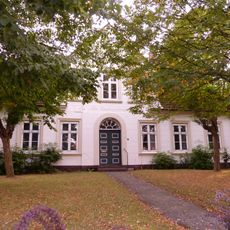
Manoir de Kaden, Manor house in Alveslohe, Germany.
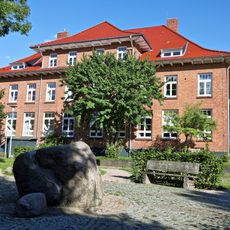
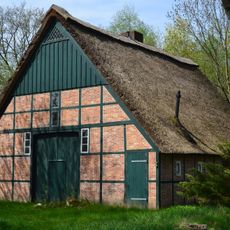
Gut Kaden is a two-storey manor house whose core dates from 1754, with a seven-axis courtyard facade and a five-axis garden facade. It was raised by one storey and given sparse neo-Gothic ornament between 1864 and 1870. Inside, a south vestibule leads to a north garden hall; a Rococo portal survives on the garden side, and the estate retains barns and stables.
The estate was first mentioned in 1377 as tho Caden and belonged to the knights of Alverslo, who sold it around 1400 to the Reventlow family; it later passed to King Christian I of Denmark. In 1496 the Ahlefeldt family acquired the lands and kept them for over 250 years. A modest manor house was built around 1532 as a widow's residence. In 1754 the indebted Ahlefeldts sold the estate to the von Schilden family, who had a new manor house built; its core dates from 1754, with Ernst Georg Sonnin as architect. From 1864 to 1870 the Platen-Hallermund family added a storey and neo-Gothic decoration.
The name Kaden goes back to the 1377 form "tho Caden". Since October 2008 the manor has hosted civil wedding ceremonies, and the halls can also be rented for funerals. The former estate grounds now form the golf course, with old avenues and garden elements absorbed into the layout.
The manor now operates as a golf club with an on-site restaurant and rents its spaces for events and celebrations. Plan your visit around the club's operating hours, as access to the buildings and grounds depends on current activities and bookings.
The Ahlefeldt family held the estate for over 250 years, continuously expanding its grounds and buildings during their ownership. This extended period of stewardship left a lasting imprint on the landscape and made it a defining property in the region's aristocratic heritage.
The community of curious travelers
AroundUs brings together thousands of curated places, local tips, and hidden gems, enriched daily by 93,250 contributors worldwide.