Harliburg, Medieval fortress ruins near Vienenburg, Germany
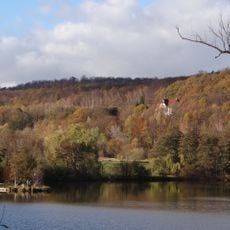
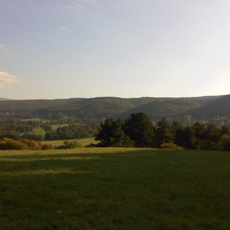
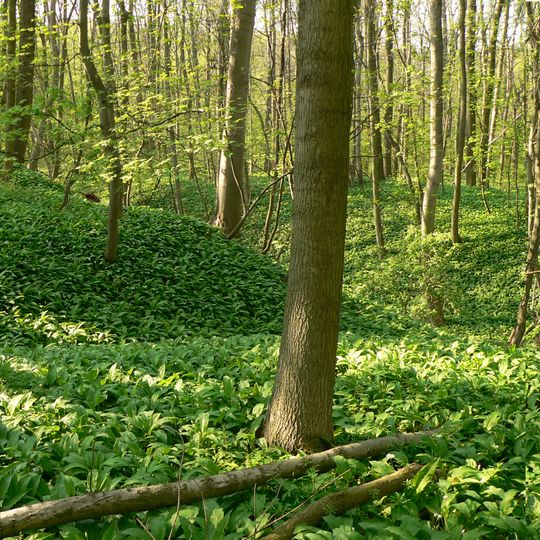
Harliburg is a castle ruin perched on a hilltop about 200 meters high in the Harly Forest, with remnants of circular ramparts and deep defensive ditches still visible. The site overlooks the surrounding landscape and conveys a sense of its former military importance through its elevated position.
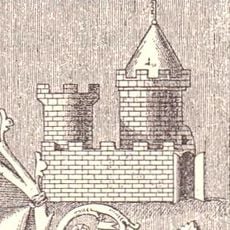
Otto IV had Harliburg built around 1203 to control the northern access routes to Goslar, which sided with Philip of Swabia. In 1291, after a four-month siege in the Herlingsberg War, the castle capitulated and was slighted. Its stone was later used to build Wiedelah Castle between 1292 and 1297 and Vienenburg Castle in 1300.
The Latin epic Herlingsberga, written in the 13th century by Heinrich Rosla of Nienburg (Saale), recounts the slighting of Harliburg. Rosla was a contemporary poet, not a monk. The poem's title uses the castle's alternate name, Herlingsberg.
The castle site lies on a broad summit of the Harly Forest at 193 m, about 1 km north-northeast of Vienenburg. The core castle occupies a 150 × 50 m plateau reached from the southeast through the main ditch, where the earthworks suggest a recessed gate passage. The moat north of the core is 16–18 m wide and its floor lies 12 m below the plateau; the main rampart of the first outer bailey stands 3 m high.
The sources disagree on where the stone went: one chronicle, whose reliability is disputed, says it was used for Vienenburg and Wiedelah castles, while the English account dates Wiedelah's water castle to 1292–1297 and Vienenburg to 1300. Around the main castle, five siege works from 1291 survive, including a 20 × 20 m square outwork about 300 m northeast.
The community of curious travelers
AroundUs brings together thousands of curated places, local tips, and hidden gems, enriched daily by 92,622 contributors worldwide.