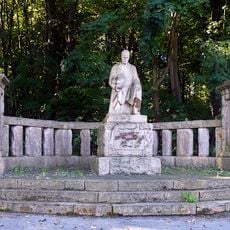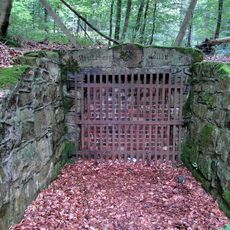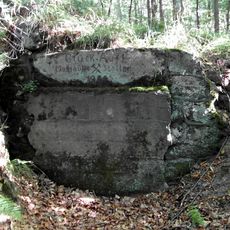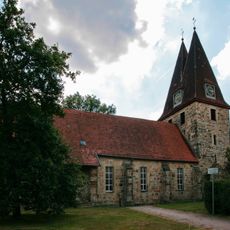
Heisterburg, Medieval ring fort in Bad Nenndorf, Germany
Heisterburg is a medieval ring fort in Bad Nenndorf built with walls and ditches to form a defensive circle. The site features two gate structures with inward-facing designs and represents a type of stronghold common in northwestern Germany during the medieval period.
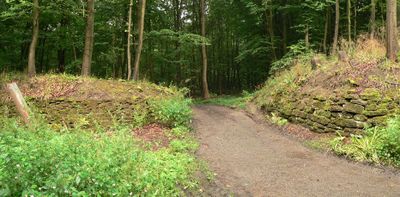
Heisterburg is a hillfort of the 10th to 11th century, lying half in the Samtgemeinde Nenndorf and half in the town of Rodenberg. It sits on the former border between the medieval Bukkigau and Marstemgau, and today on the boundary between the Region Hannover and the Landkreis Schaumburg. Excavations took place in 1887, 1891–92 and 1929–32; the 1891 work exposed the stone wall inside the main rampart.
No written record of the Heisterburg survives; its name is known from old field maps, where the area appears as "hoiser Burch" in 1574, "Hoisburg" in 1651 and "Heuser Burg" in 1840. The root Hoyer comes from the old word hoye for herding, so the name means a watchtower fort on high ground. A second reading links it to the heister, a young beech wood, around the ramparts.
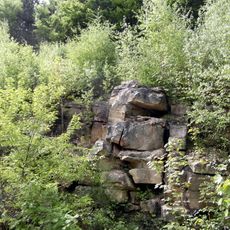
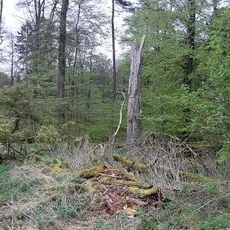
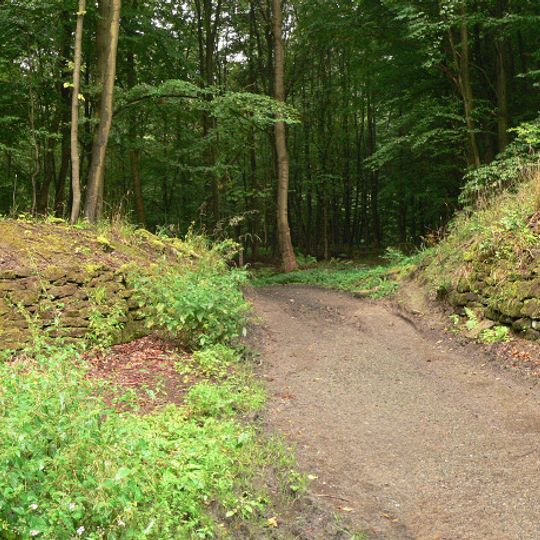
The ramparts lie in woodland near the ridge of the Deister at about 330 m above sea level, roughly halfway between Feggendorf and Bad Nenndorf; the site straddles the boundary of the Region Hannover and the Landkreis Schaumburg. Since 2011 signs on the walls forbid digging and mountain biking. Paths cross the 2 m high, 10 m wide rampart and the silted ditch, which was once about 8 m wide and 2.5 m deep.
Archaeological investigations have uncovered evidence of medieval metalworking and craft activities within the fort. These discoveries reveal that the site served not only military purposes but also housed productive economic operations.
The community of curious travelers
AroundUs brings together thousands of curated places, local tips, and hidden gems, enriched daily by 92,744 contributors worldwide.