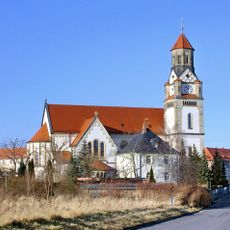
Heilandskirche, Heritage church building in Cotta, Dresden, Germany
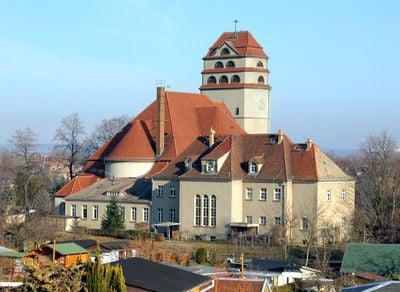
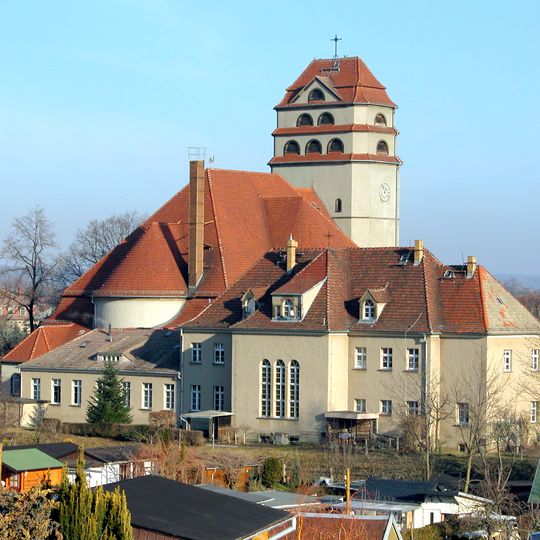
The Heilandskirche is a church building in Cotta, Dresden, featuring varied structural elements with a curved tile roof and a compact tower. The building combines modern design with crafted details and defines the character of the surrounding neighborhood.
A 1909 competition drew 68 designs; Rudolf Kolbe, whose entry was among four purchased, was commissioned in 1912 to build his revised plan. Work began on 1 May 1914, the foundation stone was laid on 7 June, and the church council stopped the site on 14 August 1914 for the war. Inflation delayed resumption until 1925, when Kolbe simplified the design; consecration followed on 26 May 1927.
The interior fittings come from sculptor Rudolf Born and painter Karl Schulz. The ceiling shows the four evangelists, and the side conches hold galleries lit by stained-glass windows depicting Christ's baptism and the healing of the paralytic. The organ, built by the Jehmlich workshop at the time of construction, was enlarged in 1936 and has almost 5,000 pipes.
Access to the building involves climbing a multi-step staircase that leads to the main entrance, where a large Christ statue made of Elbe sandstone stands. Visitors should be aware that steps are required to enter and this may restrict accessibility for some people.
The three bells in the tower came from the Jakobikirche, which was destroyed in World War II; the original bells of the Heilandskirche were melted down for armaments during the same war. The organ from the Jehmlich workshop dates from the construction period and was enlarged in 1936 to almost 5,000 pipes.
The community of curious travelers
AroundUs brings together thousands of curated places, local tips, and hidden gems, enriched daily by 93,180 contributors worldwide.