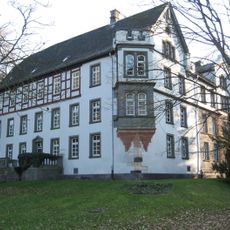
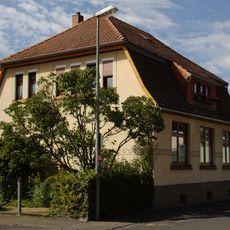
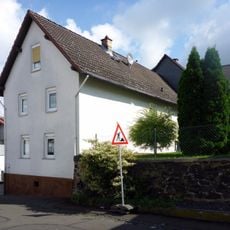
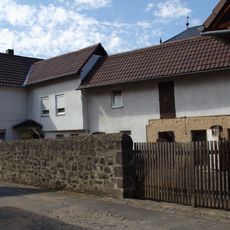
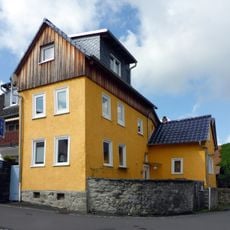
Hofburg, Castle in Alten-Buseck, Germany.
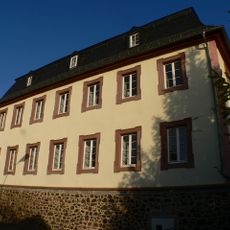
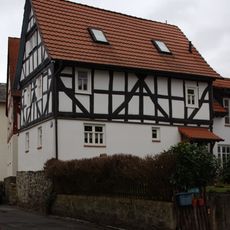
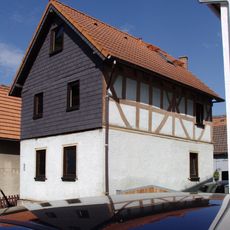
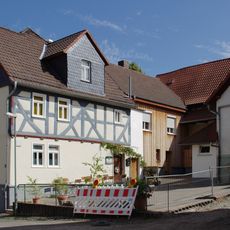
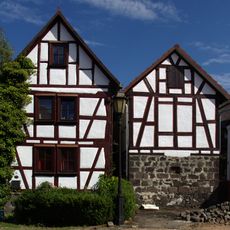
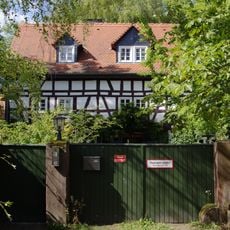
The Hofburg in Alten-Buseck is a two-story classicist manor house with a symmetrical plan and a high mansard roof, built on and with parts of the vanished medieval castle. Its massive rubble-stone basement and fully slate-clad upper floor with plain rectangular shuttered windows define the exterior. A north-facing central annex with an open ground-level hall and staircase preserves the symmetry; a long timber-framed building with a gable roof adjoins to the southeast.
The building was first mentioned in 1393 and served the von Buseck family as their ancestral seat for several centuries. Between 1836 and 1837, it was converted into a parsonage, marking a fundamental change in its use.
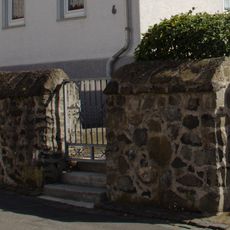
The name Hofburg refers to a noble court, and the site is still enclosed by courtyard walls on its northwest and east sides. The former estate became the first parsonage of Alten-Buseck's independent parish in 1836–37, so the grounds served the local church community before passing into municipal ownership in 1838.
The building stands on private property and can be viewed from the outside, with its classical architecture and courtyard walls clearly visible from surrounding public paths. The exterior offers a good view of the architectural style from various angles around the property.
The site's name, Hofburg, survives from the medieval castle, but no ground plans or building remains of that castle are documented. The present manor house was probably built on and with parts of the old castle, and the farmstead's Rittmeistermühle mill was abandoned soon after it was built around 1826.
The community of curious travelers
AroundUs brings together thousands of curated places, local tips, and hidden gems, enriched daily by 93,778 contributors worldwide.