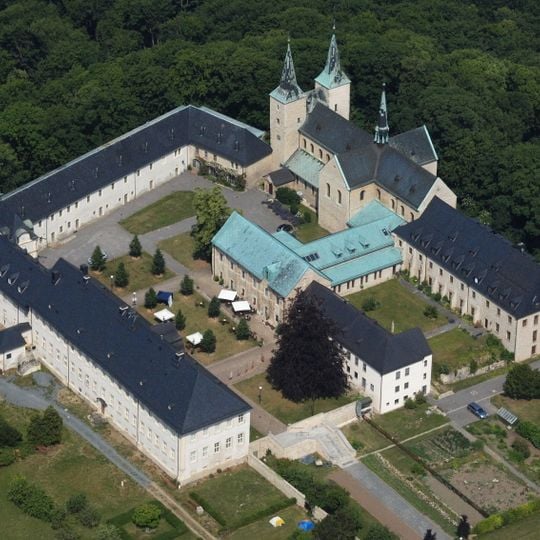
Huysburg, Benedictine monastery in Huy, Germany.
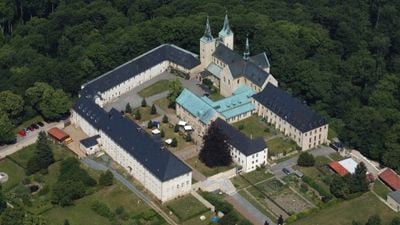
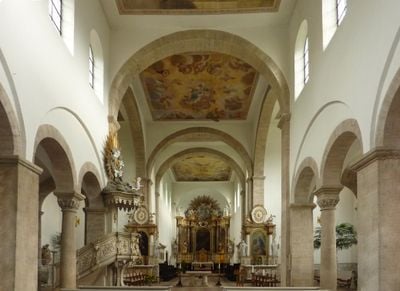
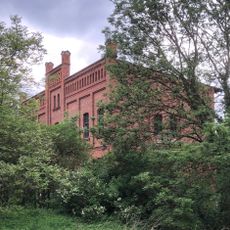
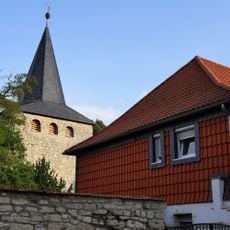
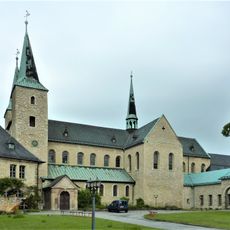
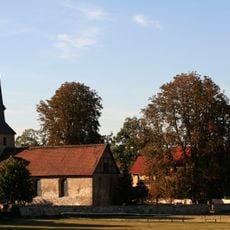
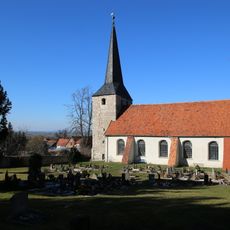
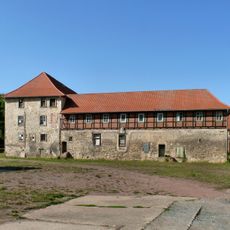
Huysburg is a Benedictine monastery on the Huy ridge near Halberstadt, founded around 1080. Its Romanesque abbey church, consecrated in 1121, has a white-plastered interior with round stone arches, a ceiling fresco of golden and blue figures, and a raised wooden pulpit with a gold sunburst. The complex is arranged around a paved courtyard, with light-colored walls, dark steep roofs, and a tall structure with two pointed towers topped by greenish spires.
A Frankish castle stood on the Huy around 790; the site passed to the Bishops of Halberstadt in 997, who built a chapel consecrated in 1058. Bishop Burchard II allowed three nuns to settle in 1070, and Ekkehard became the first abbot on 24 December 1080. The abbey joined the Bursfelde reform in 1444 and had 31 monks by the late 15th century. It was dissolved in 1804 and refounded by Benedictines from Tyniec in 1972.
The monastery preserves Benedictine traditions through daily prayers and religious services that visitors can experience. The community follows the Rule of Saint Benedict, which continues to guide its way of life today.
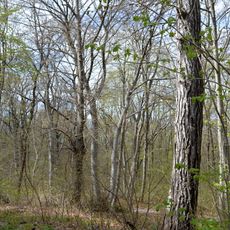
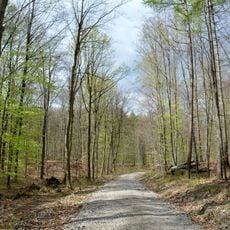
The monastery stands at about 300 metres on the wooded Huy ridge, nine kilometres northwest of Halberstadt, and is the first station of the Jakobsweg in the Harz region. It lies on the southern route of the Straße der Romanik, so it is reached by road from Halberstadt; the grounds and church are open to visitors, and the guest house takes individual guests and groups.
Beneath the monastery lie remains of a circular rampart from a Frankish castle built around 790 during Charlemagne's Saxon campaigns. These archaeological layers reveal the early history of the site, predating the monastery's foundation by centuries.
The community of curious travelers
AroundUs brings together thousands of curated places, local tips, and hidden gems, enriched daily by 94,441 contributors worldwide.