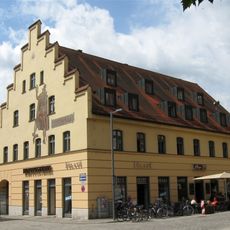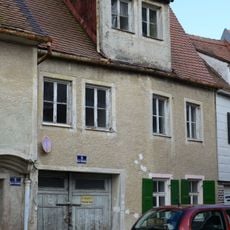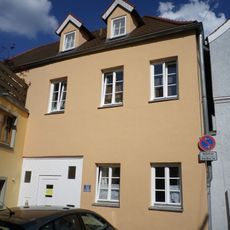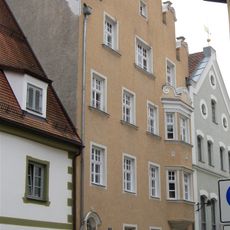
Hohe Schule, Architectural heritage monument in Ingolstadt, Germany.
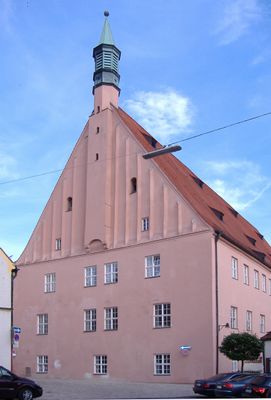
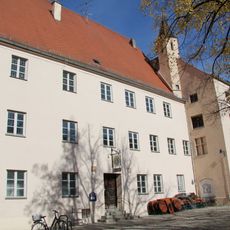
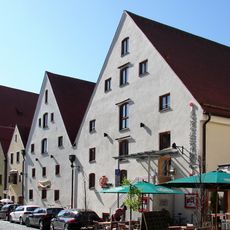
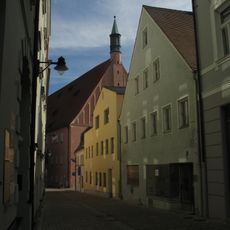
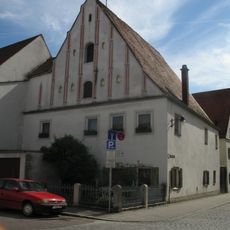
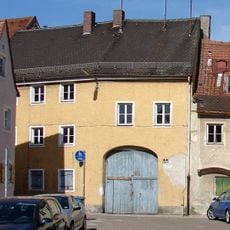
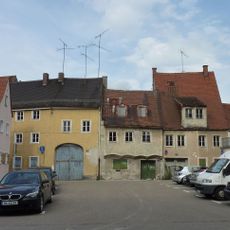
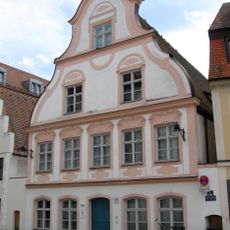
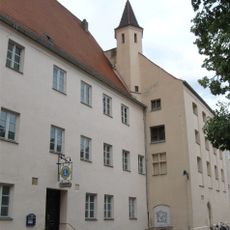
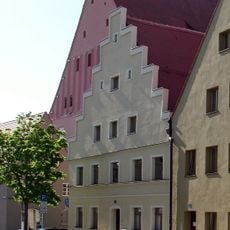
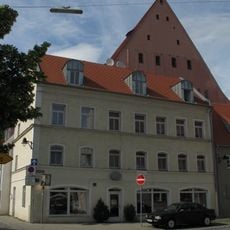
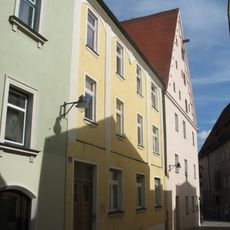
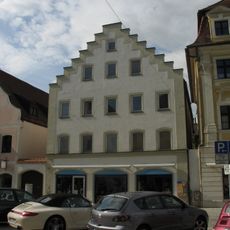
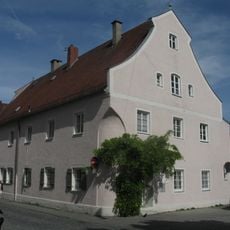
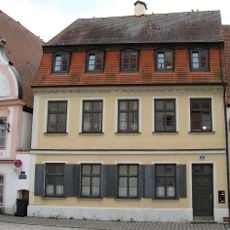
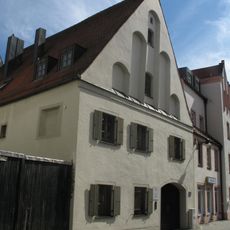
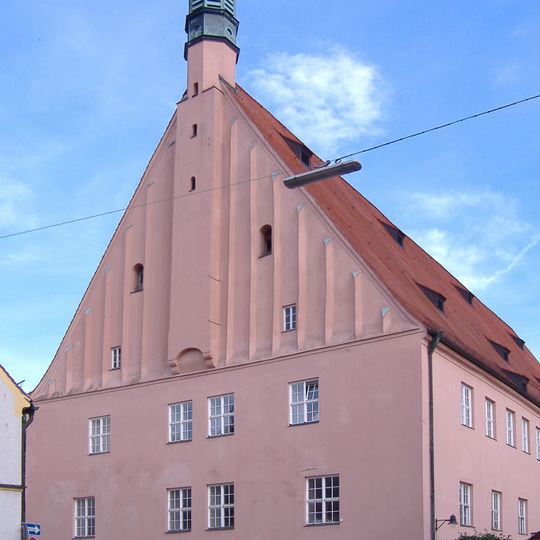
Hohe Schule is a multi-storey secular building from the 15th century in Ingolstadt's old town. It has a steep gable roof and a north gable divided by corner pilasters, topped by a roof turret. Construction began around 1434, and dendrochronological analysis of the roof truss dates it to 1435/36.
Duke Ludwig the Bearded of Bavaria-Ingolstadt founded the building in 1429 as a Pfründnerhaus, where poor residents prayed for his soul. Construction began around 1434, and dendrochronology dates the roof frame to 1435/36. From 1472 it was converted into a university building, serving as the seat of Bavaria's first state university from 1503 to 1800.
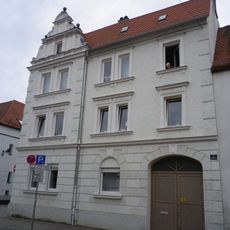
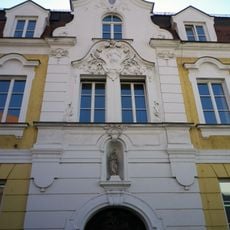
The name Hohe Schule survived the university's 1800 departure and stayed with the building through its later school use. A life-size fresco by Johannes Eppelein was created in the early 1930s, when city architect Franz Xaver Schwäbl rebuilt the house in a historicising style. From 1971 to 1977 it housed the Apian-Gymnasium.
The ground floor housed a restaurant from 2002 to 2013, designed as a non-smoking café to protect the frescoes. Today the building holds the Catholic University of Eichstätt-Ingolstadt's chair for civil law and the Ingolstadt office of the IHK, plus classrooms of the FOSBOS Ingolstadt.
The ground floor held a restaurant from 2002 to 2013, designed as a non-smoking café from the start to protect the valuable frescoes. Since 2005 the building has housed the Center for Higher Education Didactics of Bavarian Universities, but that location was given up in 2025, with activities moved to Munich and Nuremberg.
The community of curious travelers
AroundUs brings together thousands of curated places, local tips, and hidden gems, enriched daily by 93,178 contributors worldwide.