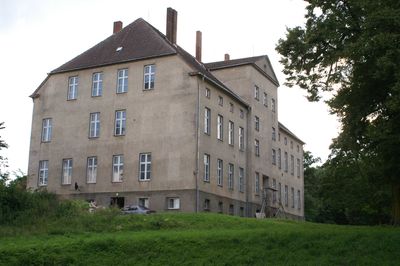
Herrenhaus Alt Plestlin, Manor house in Bentzin, Germany
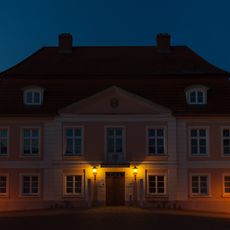
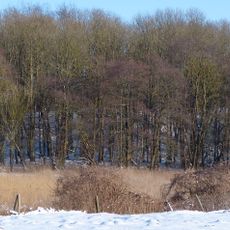
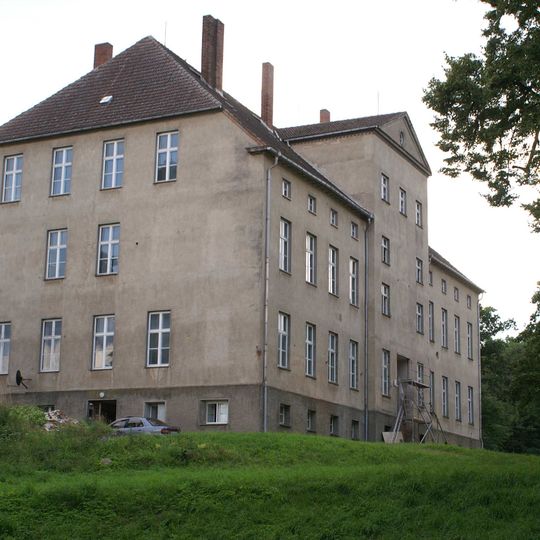
Herrenhaus Alt Plestlin is a two-storey plastered manor house with a basement and a hipped roof, built around 1850 on the foundations of an older building. It has three-storey central projections on the courtyard and park sides; the original pilasters and a balcony with wrought-iron railing on the park side are now missing. The building is visible from the Peene in the season without vegetation.
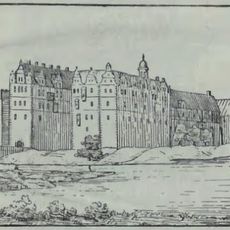
The estate was first documented in the 13th century as a knightly holding. Duke Bogislaw X enfeoffed the Suckow brothers with Plestlin and Jagetzow on 5 March 1504; the family held it until Joachim Suckow died around 1660. In the Swedish era the estate passed to the von Keffenbrink family, and the present manor was built around 1850 on older foundations. After 1945 refugees were housed here, and the building still contains apartments.
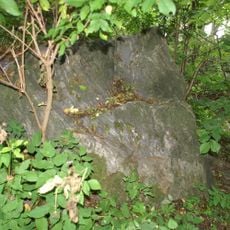
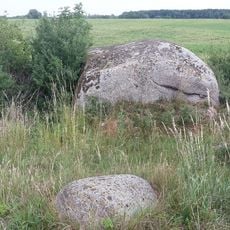
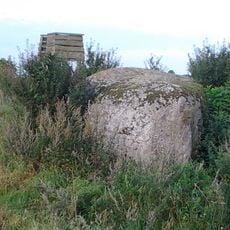
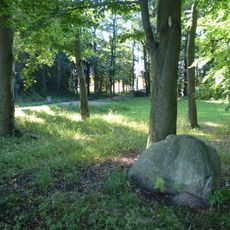
The manor's festival hall still has its finely articulated stucco ceiling from the building period around 1850. The house has been used as apartments since after the Second World War, when refugees were first housed there. The nearby memorial stone honours Hanko, the horse of Olympic champion Carl-Friedrich von Langen.
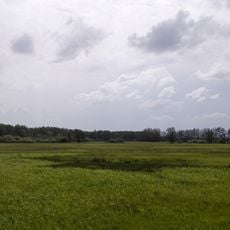
The house sits northeast of the village and is reachable through paths leading directly to the Peene Valley lowlands. The surrounding terrain is relatively flat, making it easy to visit on foot or by bicycle.
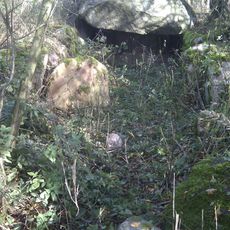
West of the house stands a memorial stone for Hanko, the horse of Olympic champion Carl-Friedrich von Langen. His widow Marie Louise, born von Prollius, lived in Alt Plestlin for several years after marrying his cousin Friedrich Carl in Berlin in 1937.
The community of curious travelers
AroundUs brings together thousands of curated places, local tips, and hidden gems, enriched daily by 94,617 contributors worldwide.