Hohler Stein, Prehistoric cave and archaeological site in Böhmfeld, Germany
Hohler Stein is a natural karst cave near Schambach with two chambers connected by an eight-metre ascending passage. The lower cave covers about 12 square metres and rises 11 metres; the upper cave has a floor of roughly 75 square metres and a height of 13 metres. The whole system is 35 metres long, entered through a natural arch about four by four metres.
Max Schlosser, curator at the Palaeontological Museum in Munich, carried out the first excavations in 1901. Ferdinand Birkner continued them around 1922/23, Carl Gumpert from 1951 to 1953, and Karl Heinz Rieder from 1977 to the late 1980s. The finds include Ice Age animal bones and teeth, hornstone tools, and keilmesser assigning a layer to the Micoquien culture of the Neanderthals.
The cave's name, Hohler Stein ("hollow rock"), refers to its natural archway, about four by four metres, which visitors pass through to enter. Excavations since 1901 have yielded Ice Age animal bones, teeth and hornstone tools; the Middle Palaeolithic layer is attributed to the Micoquien culture of the Neanderthals. Later finds range from iron spearheads and Roman denarii to modern objects.
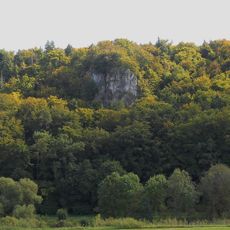
The cave lies about two kilometres south of Schambach in the Herrnholz forest, on a slope above the Katzental dry valley. The entrance is a natural arch roughly four by four metres; the passage between the lower and upper caves climbs eight metres. The floor is uneven and there are no facilities, so bring a torch and wear sturdy footwear.
Stone tools and bones from Ice Age hunters and prey animals were discovered within the cave, offering a window into how early people used this shelter. These finds reveal the site as both a refuge and a hunting camp from thousands of years ago.
The community of curious travelers
AroundUs brings together thousands of curated places, local tips, and hidden gems, enriched daily by 93,832 contributors worldwide.