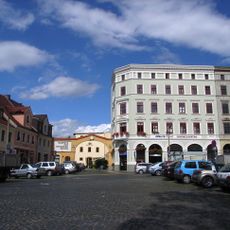
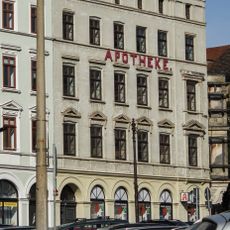
Innenstadt, Historic district in Görlitz, Germany
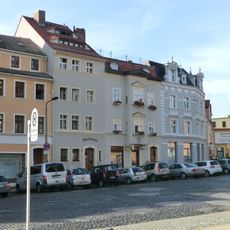
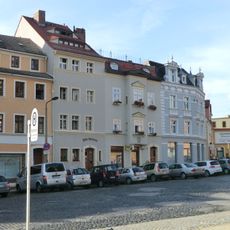
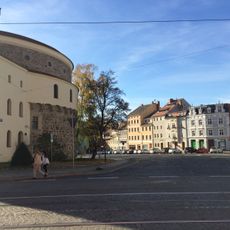
The Innenstadt lies outside the old town walls and is defined by Gründerzeit buildings in the Historicist style. It grew from the Frauenvorstadt and Reichenbacher Vorstadt, which still had a rural character in the early 19th century. Its lower Berliner Straße is now Görlitz's main pedestrian zone.
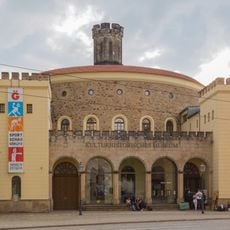
The area outside Görlitz's medieval walls kept a rural character into the early 19th century, with the Frauenvorstadt before the Frauenturm and the Reichenbacher Vorstadt along the road to Reichenbach/O.L. and Bautzen. Building activity began in the 1840s, creating a second centre at the Kaisertrutz alongside the old Ober- and Untermarkt. Under the GDR the core shifted toward Berliner Straße and Demianiplatz, and after 1990 subsidy-funded renovation followed.
The district's commercial spine is the lower Berliner Straße, today Görlitz's main pedestrian zone. Nearby stands the Kaufhaus Görlitz, one of the few surviving pre-war department stores in Germany; run by Hertie until it closed in 2009, it was the chain's only store without an escalator. Behind it, the City-Center Frauentor occupies the site of the demolished Wilhelmtheater.
The district is easy to navigate on foot, with most attractions located within the central core. Parking is available and public transport links the area to other neighborhoods throughout the city.
The Innenstadt arose outside the medieval walls: the Frauenvorstadt before the Frauenturm and the Reichenbacher Vorstadt along the road to Reichenbach/O.L. and Bautzen. Building activity began in the 1840s, creating a second centre at the Kaisertrutz alongside the old Ober- and Untermarkt. The Kaufhaus Görlitz, run by Hertie until 2009, was the chain's only department store without an escalator.
The community of curious travelers
AroundUs brings together thousands of curated places, local tips, and hidden gems, enriched daily by 94,629 contributors worldwide.