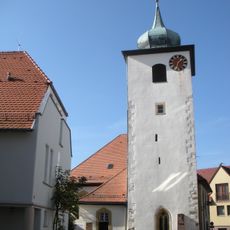
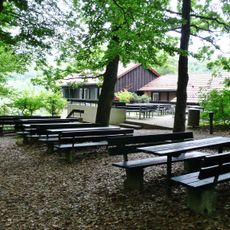
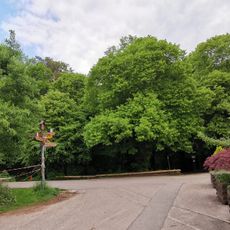
Katharinenlinde, Hill and tourist attraction in Esslingen am Neckar, Germany.
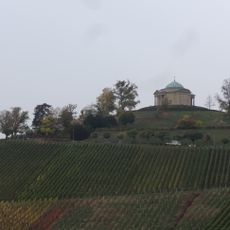
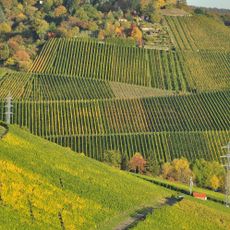
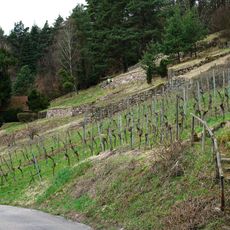
Katharinenlinde is a hilltop in Esslingen am Neckar at about 469 meters high, offering open views of the surrounding landscape and local vineyards across the Baden-Württemberg region. The summit is reached by hiking trails that connect to various viewpoints and natural areas nearby.
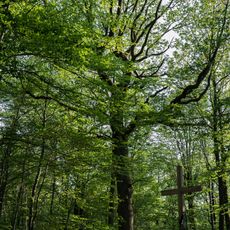
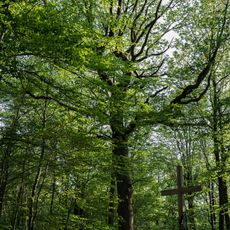
The linden gave its name to a regional legend recorded in print by 1812, when Johann Daniel Georg von Memminger noted that the pious Katharina, founder of Esslingen's hospital, was said to be buried here. The original tree was destroyed by a storm on 9 November 1878; today's linden stands somewhat further east and was planted in the early 19th century.
The name refers to Saint Catherine of Alexandria, whom local legend names as founder and patron of Esslingen's St. Katharinen-Spital and who is said to lie buried by the linden. A 1833 travellers' handbook records the tale: condemned for her faith, she was saved when lightning set the scaffold alight, and a linden was planted in memory. The tree itself was destroyed by a storm on 9 November 1878; the present one stands slightly further east.
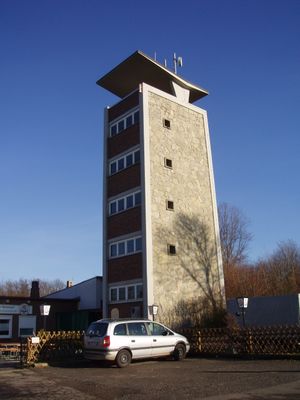
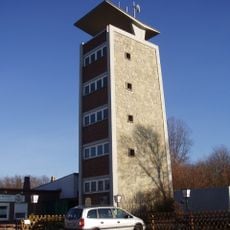
The Katharinenlindenturm, a 17-metre steel-reinforced concrete observation tower built by the Schwäbische Albverein in 1957, stands just beside the linden on the Rüderner Heide north of Esslingen. An earlier managed shelter hut with a low wooden tower occupied almost the same spot from 1899. The site lies at about 469 metres, roughly 60 metres above the surrounding terrain.
The linden that gives the hill its name was destroyed by a storm on 9 November 1878; the tree standing today, somewhat further east, was planted in the early 19th century. Near it the Schwäbische Albverein built a 17-metre reinforced-concrete observation tower in 1957, replacing a managed shelter hut with a low wooden tower erected on almost the same spot in 1899.
The community of curious travelers
AroundUs brings together thousands of curated places, local tips, and hidden gems, enriched daily by 94,902 contributors worldwide.