Volkspark am Weinbergsweg, Public park and playground in Berlin-Mitte, Germany.
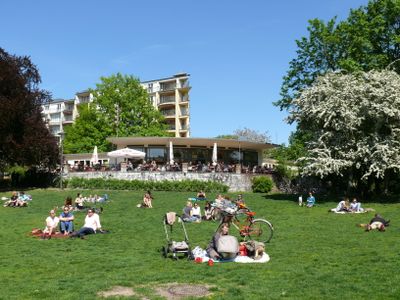
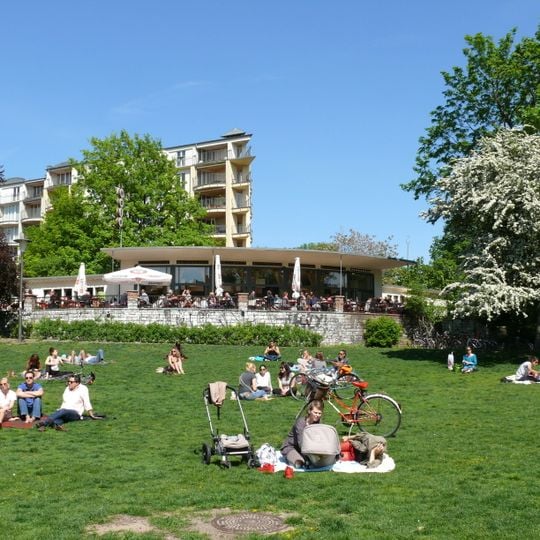
Volkspark am Weinbergsweg is a 4.3-hectare park on a slope rising about 15 metres from Brunnenstraße to the upper playground. A central lawn lies below a plateau with the Café am Weinberg, built 1957–58; a kidney-shaped pond sits in the southwest corner. Paths around the lawn pass a rose garden with fountain, a playground, a football pitch and table tennis tables.
Vines were grown on the slope until about 1740; by 1751 the land was planted with mulberry trees, more than 1,200 by the late 18th century. From 1801 the Wollank family owned the hill, and in 1825 Gottlieb Friedrich Wollank dissolved the mulberry plantation. After Allied air raids from 1943 destroyed the surrounding buildings, the park was laid out in 1954–1956 to plans by landscape architect Helmut Kruse.
The name Weinberg refers to the vineyard planted on this slope from the 16th century until vines were replaced by more than 1,200 mulberry trees around 1751. From 1763 the goldsmith Carl Friedrich Mollard ran a much-visited coffeehouse under large trees here, and from 1801 the Wollank family owned the land until the Second World War.
The park is easily accessible during daylight hours and offers areas for play, sports, and relaxation with various facilities including a café. Visitors should be aware that the terrain is hilly and different pathways present varying physical demands.
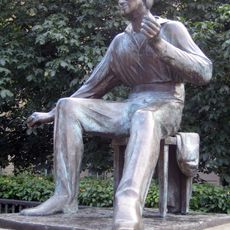
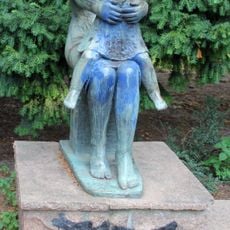
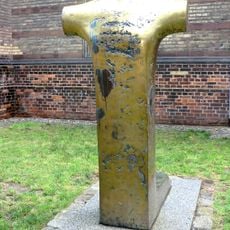
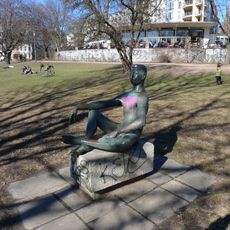
The Heinrich Heine monument in the northwest of the park was made by Waldemar Grzimek in 1955 and originally intended for the Kastanienwäldchen on Unter den Linden in 1956; it was instead erected here in 1958. Its base carries Heine's line that an idea seizes us and drives us into the arena like forced gladiators.
The community of curious travelers
AroundUs brings together thousands of curated places, local tips, and hidden gems, enriched daily by 94,473 contributors worldwide.