Pomeranzen garden, Renaissance garden in Leonberg, Germany
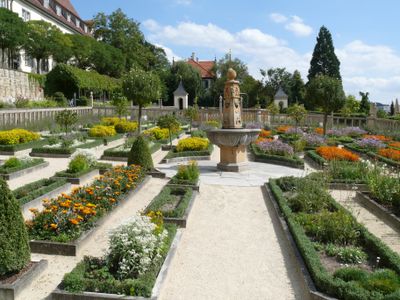
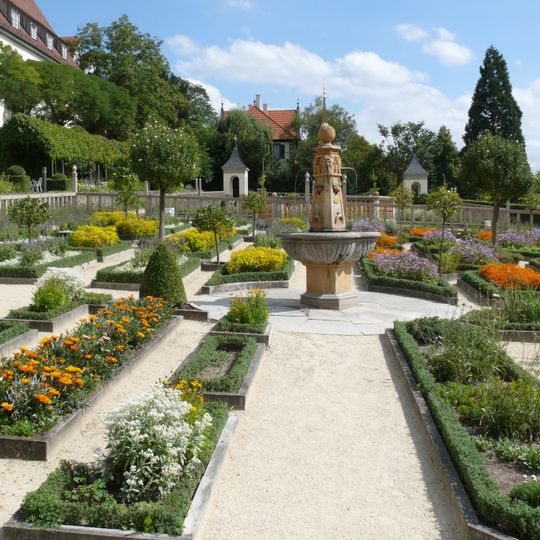
The Pomeranzen garden is a Renaissance garden in Leonberg, laid out from 1609 by Heinrich Schickhardt for Duchess Sibylla of Württemberg. A rectangular terrace south of the castle is divided into two nearly square sections, each with a shell fountain; the main axis holds a fountain with an obelisk and dolphins. Low stone-edged beds are planted with herbs and flowers, and bitter oranges stand in tubs along the central axis in summer.
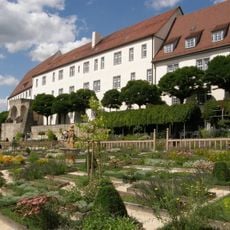
Duchess Sibylla of Württemberg, widow of Duke Friedrich I, commissioned Heinrich Schickhardt to lay out the garden; a terrace with a double staircase was built south of Leonberg Castle in 1609. After Sibylla's death the castle served as a widow's residence, but by 1743 the garden had lost its princely character, became allotments and fell into oblivion. Foundations reappeared during clearing work in the early 1970s, and the garden was reconstructed by 1980 from original plans; restoration followed for its 400th anniversary in 2009.
The garden shows how bitter orange trees were valued as signs of wealth and refined taste in this region. Today, visitors can observe the careful arrangement of these plants and understand their role in demonstrating status and knowledge of distant lands.
The garden is open from April through October for visitors to explore the layout and design at leisure. Comfortable walking shoes are recommended since the pathways are continuous throughout the space and the plantings vary in appearance depending on the season.
The bitter orange trees are cultivated in specially designed wooden containers that are transported between the garden and protected winter storage areas each season. This regular movement of plants was essential because the trees could not survive the cold winters and required careful handling throughout the year.
The community of curious travelers
AroundUs brings together thousands of curated places, local tips, and hidden gems, enriched daily by 93,861 contributors worldwide.