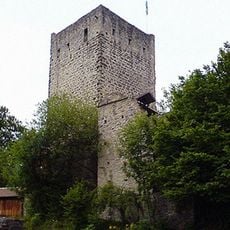
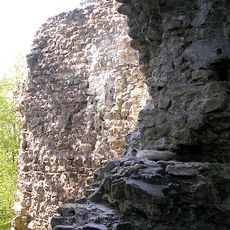
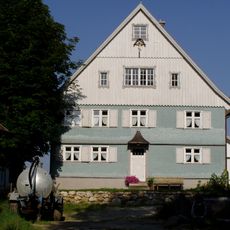
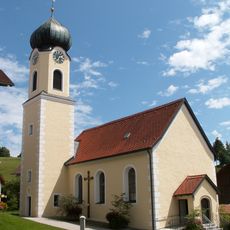
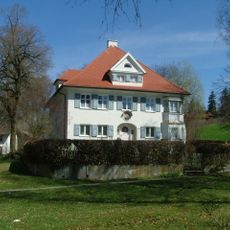
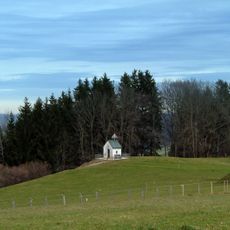
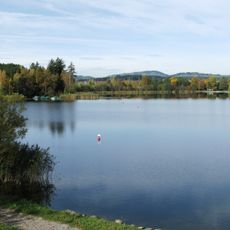
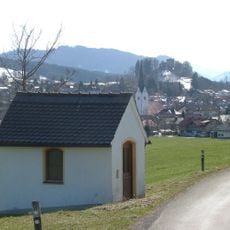
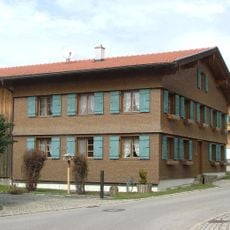
Jodbad Sulzbrunn, Historic iodine bath in Sulzberg, Germany
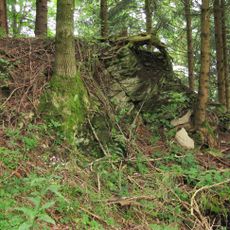
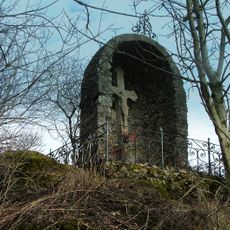
Jodbad Sulzbrunn is a former iodine spa on a wooded slope at 875 m in the market municipality of Sulzberg, about 20 km southeast of Kempten. Its Römerquelle was tapped in 1923 through a 30-metre adit ending in a three-metre-deep spring shaft cut into a water-bearing fissure of the molasse sandstone. The site also has the Hildegardsquellen and sulphur-bearing springs discovered in 1906.
The springs were first mentioned in a 1059 deed describing the bishop of Augsburg's hunting district as "Sulzeberch". In 1837 the innkeeper Pankratius Kapitel was cured of a goitre by drinking the water, prompting chemist Karrer to analyse it in 1838 and confirm its iodine content. The Römerquelle was named in 1855, and the first bath house opened in 1852, expanding into a spa two years later.
The name Sulzbrunn derives from "Sulzeberch", the salt-bearing slope recorded in a 1059 Augsburg document; the community of Sulzberg takes its name from the same source. From 1840 the iodine water was bottled and sold, and from 1852 the Wildbad Sulzbrunn spa offered drinking cures with iodine-rich whey, milk and kumis, plus an inhalation cabinet fitted with ottomans.
The former spa lies at 875 m on the slope above Sulzberg, about 20 km southeast of Kempten. The Römerquelle is reached through a 30 m adit entered by a shaft, and the spring chamber drops 3 m along the molasse sandstone. The spring water is 7.5 °C, so the adit stays cold and damp.
In 2014, geologists from the Bavarian State Office for the Environment found biofilms up to 20 cm long in the Römerquelle tunnel, formed by methane- and iodine-eating bacteria. According to the Helmholtz Centre Munich, this was the world's first known occurrence of large biofilms of methane-oxidising bacteria.
The community of curious travelers
AroundUs brings together thousands of curated places, local tips, and hidden gems, enriched daily by 94,563 contributors worldwide.