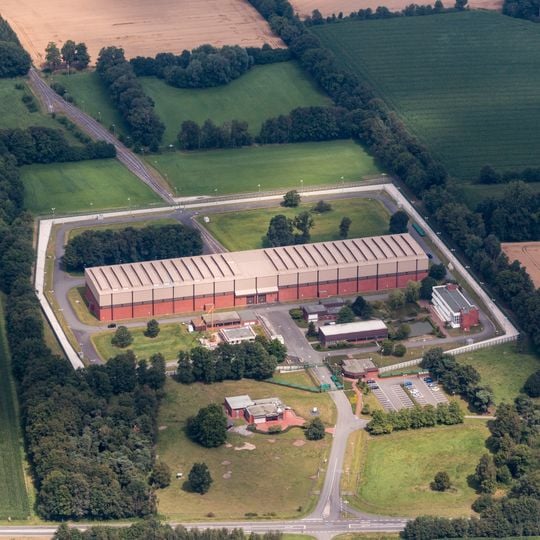
Nuclear waste storage Ahaus, Interim radioactive waste repository in Ahaus, Germany.
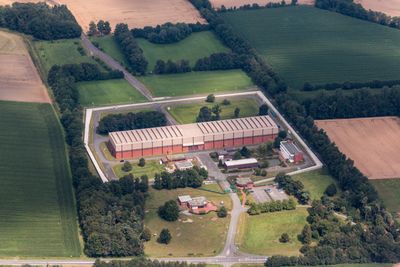
The Ahaus Nuclear Fuel Interim Storage Facility is a site that stores spent fuel elements from German power plants. The facility consists of two storage areas separated by a reception zone, where spent fuel is held in specially designed transport containers.
Built from 1984 to 1990, the facility first stored CASTOR casks with spent fuel elements from the decommissioned Hamm-Uentrop high-temperature reactor in 1992. A 1998 transport of 106 highly radioactive fuel elements from Gundremmingen and Neckarwestheim drew more than 10,000 demonstrators and up to 30,000 police officers. Operator GNS handed the facility to the federal BGZ on 1 August 2017.
The site's name changed from Transportbehälterlager Ahaus to Zwischenlager Ahaus, and the operator passed from GNS to the federally owned BGZ on 1 August 2017. The 20 March 1998 transport of 106 highly radioactive fuel elements from Gundremmingen and Neckarwestheim drew more than 10,000 demonstrators, escorted by up to 30,000 police officers.
The site operates under continuous monitoring and regulatory oversight to maintain safety standards. Visitors should check ahead about access, as entry may be restricted for security reasons.
The eastern half of the hall holds CASTOR casks with highly radioactive waste, the western half concrete, cast and steel containers with low-activity waste. Among the contents are 305 small CASTOR casks of pebble fuel from the decommissioned THTR-300 in Schmehausen, whose highly enriched uranium was only partly consumed.
The community of curious travelers
AroundUs brings together thousands of curated places, local tips, and hidden gems, enriched daily by 94,344 contributors worldwide.