Talsperre Klingenberg, Reservoir dam and cultural monument in Klingenberg, Germany
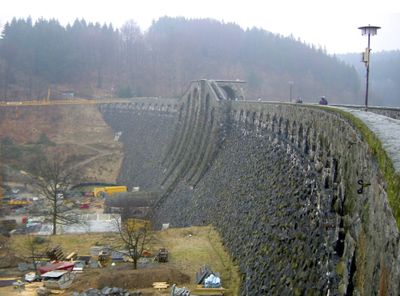
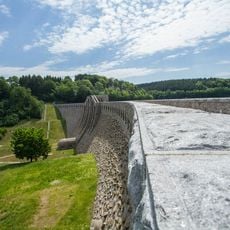
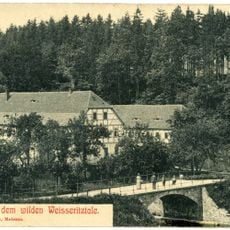
Talsperre Klingenberg is a curved gravity dam of rubble masonry built from 1908 to a design by architect Hans Poelzig, impounding the Wilde Weißeritz. Its crown carries a marked central structure, and a public path runs across the dam. The reservoir supplies drinking water to Dresden and the former Weißeritzkreis, aids flood protection and generates some electricity.
Construction started in 1908 following severe flooding in 1897, driven by the need for flood protection, and the dam opened for operations in 1914. The project applied the latest engineering techniques of its era and shaped how water power was developed in the Saxon region.
The dam was named Friedrich-August-Talsperre after Saxony's last king, Frederick Augustus III, when it opened in 1914; it now bears the name of Klingenberg, the nearby village. Its architect was Hans Poelzig, later known for the Großes Schauspielhaus in Berlin. A public path crosses the dam wall, and restaurants stand at both ends.
The reservoir is most accessible from viewpoints on the dam itself or along the shoreline paths that offer clear views of the structure. Wear sturdy shoes since ground conditions around the area vary depending on the season.
The 2002 flood sent peak flows of 160 cubic metres per second over a spillway built for only 86, scouring the 150-metre cascade with its seven steps. Repairs from 2005 to 2013 roughly doubled the dam's discharge capacity. During the work a control gallery was blasted lengthwise through the masonry and a new bottom-outlet tunnel built.
The community of curious travelers
AroundUs brings together thousands of curated places, local tips, and hidden gems, enriched daily by 93,782 contributors worldwide.