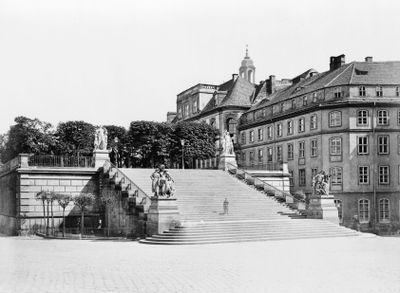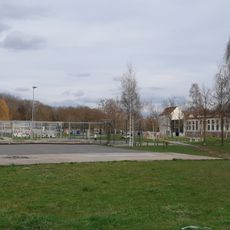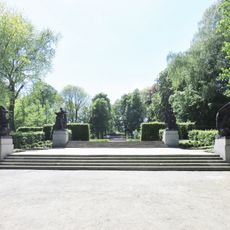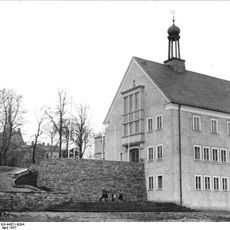
Vier Tageszeiten, Bronze sculpture at Brühl's Terrace, Dresden, Germany and stone sculpture in Chemnitz Castle Park, Germany
Vier Tageszeiten, or Four Times of Day, is a set of outdoor sculpture groups placed in two German cities: bronze figures on the Bruehl Terrace in Dresden and sandstone figures in Chemnitz. The groups each show male and female figures together with children, arranged to represent morning, midday, evening, and night.
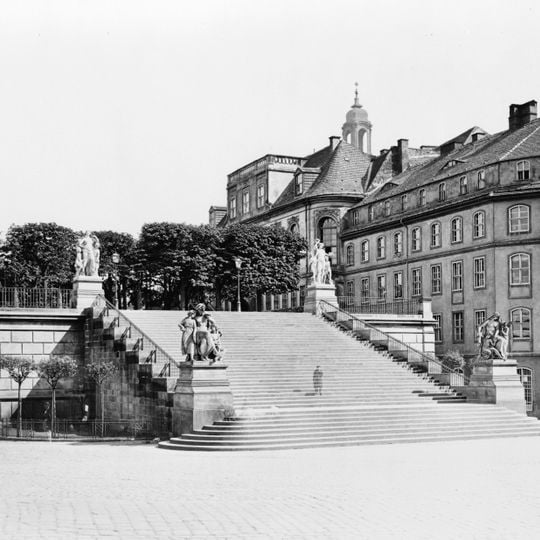
Johannes Schilling created the original figures in sandstone in 1868 for the Bruehl Terrace in Dresden, where they replaced earlier lion sculptures. In 1936, the sandstone originals were moved to Chemnitz and bronze casts were installed at the Dresden site in their place.
Each group shows men, women, and children in moments that belong to a different part of the day, from labor to rest. Visitors standing close can follow the story told by the postures and gestures of each figure without needing any explanation.
The bronze versions stand along the Bruehl Terrace in Dresden, easy to find on a walk by the river, while the sandstone versions are located in Chemnitz and also freely accessible outdoors. Both groups are best seen in good daylight, which helps bring out the detail of the figures.
Although the bronze figures in Dresden are now the more visible version, they are copies, while the sandstone originals stand in Chemnitz. The originals won first prizes at the 1869 Vienna Art Exhibition, a recognition that helped confirm Schilling's reputation and influenced the decision to keep them in a prominent public place.
The community of curious travelers
AroundUs brings together thousands of curated places, local tips, and hidden gems, enriched daily by 90,828 contributors worldwide.