Villa Marie, Timber-framed house in Blasewitz, Dresden, Germany
Villa Marie is an Italian-inspired residential building in Blasewitz located right beside the Blue Wonder bridge, featuring a distinctive tower and bay windows. The structure shows clear Mediterranean design elements and sits prominently on the Elbe riverbank.
Villa Marie was built around 1860 for the architect Friedrich Pötzsch in an Italian style with echoes of the country-house idiom, in half-timbering with a bay window and a characteristic tower. After 1900 it was known as Monbijou and was possibly renamed Villa Marie after its owner Marie Hortenbach, expropriated in 1944. It survived the Second World War without major damage; in the GDR era the last owner was expropriated and the building passed to the municipal housing administration.
The villa was called Monbijou after 1900 and later took the name of owner Marie Hortenbach, expropriated in 1944. From 1982 Blasewitz artists around Claudia Reichardt, known as "Wanda", ran an illegal gallery here, from 1988 to 1990 under the name "fotogen"; many of them drew the building.
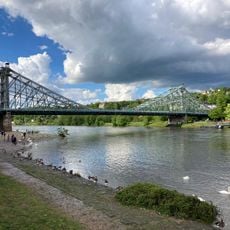
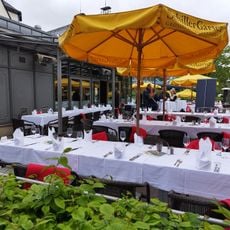
The villa stands at Fährgäßchen 1 in Blasewitz, directly beside the Blaues Wunder bridge, and today houses an Italian restaurant. Its site lies in the Elbe flood zone, so the riverbank location shapes the setting. The building is a protected monument; visitors reach it on foot from the Blasewitz side of the bridge.
In 1982 Blasewitz artists around Claudia Reichardt, known as "Wanda", rediscovered the vacant villa and ran it as an illegal gallery; from 1988 to 1990 it operated under the name "fotogen". Many artists recorded the house in drawings at that time.
The community of curious travelers
AroundUs brings together thousands of curated places, local tips, and hidden gems, enriched daily by 93,894 contributors worldwide.