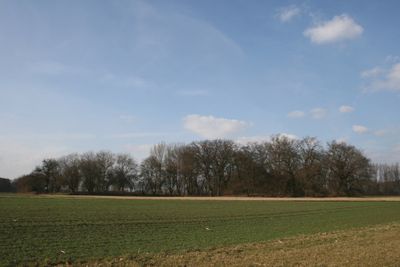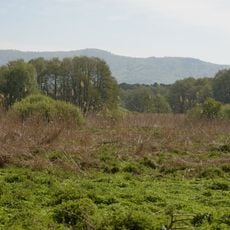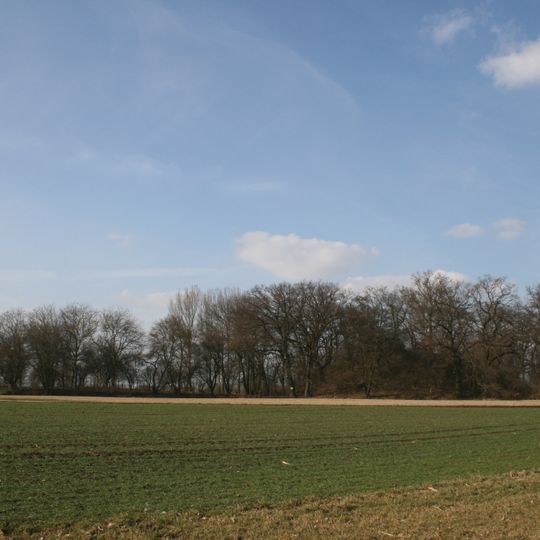
Weilerhügel, Medieval fortification in Alsbach-Hähnlein, Germany.
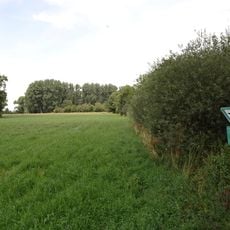
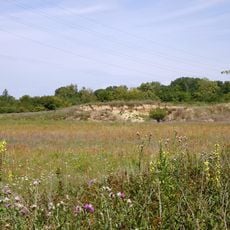
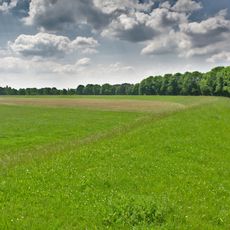
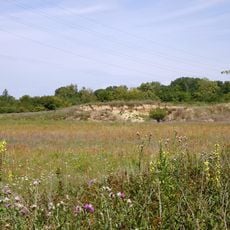
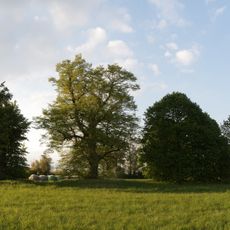
Weilerhügel is a medieval fortification built on an artificial mound surrounded by wetland terrain. The central earthwork shows clear traces of former structures and defensive arrangements.
The site appears in written records from 1129 when it was mentioned by Mainz church authorities. It served as a power base for different rulers throughout the medieval period.
The name Weilerhügel comes from a 1516 Weistum that called the site "Weyler uf Alt-Bickenbach", after the hamlet (Weiler) that had grown on the old castle grounds. The Vorburg area is now a Streuobstwiese, a traditional orchard meadow of scattered fruit trees, and the whole site lies within the Altneckarlachen nature reserve.
The site is openly visible and freely accessible, though sturdy footwear is advisable for exploring the surrounding wetland terrain. Any archaeological work or research on the grounds requires proper official permits under German heritage laws.
The 1876 dig in the outer bailey was run by the Historisches Verein für das Großherzogtum Hessen, not in the 1870s as often assumed from earlier probes; small test trenches had already been cut in 1838, and a 1913 investigation traced a wall on the summit of the motte. A box of sherds, mostly medieval domestic pottery, is kept at the Hessisches Landesmuseum Darmstadt.
The community of curious travelers
AroundUs brings together thousands of curated places, local tips, and hidden gems, enriched daily by 94,644 contributors worldwide.