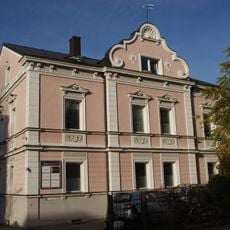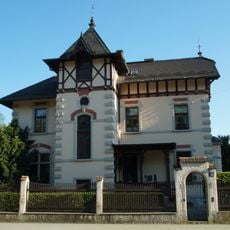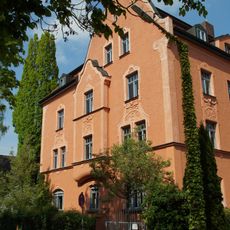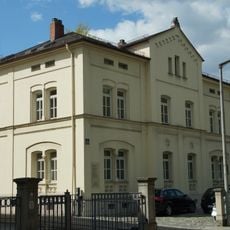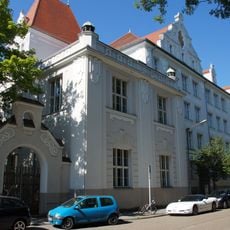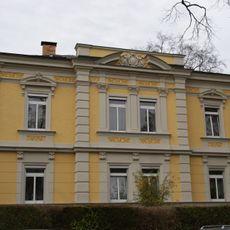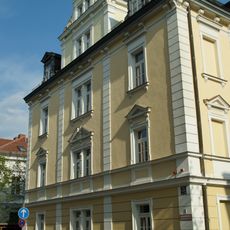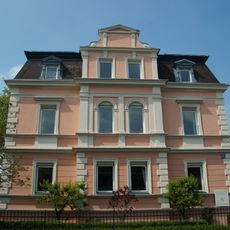
Weinschänk-Villa, Architectural heritage monument in Regensburg, Germany
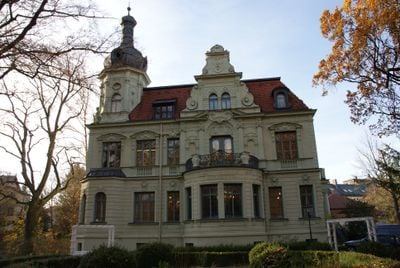
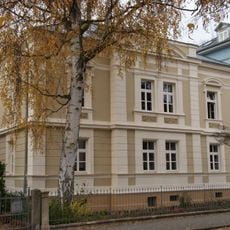
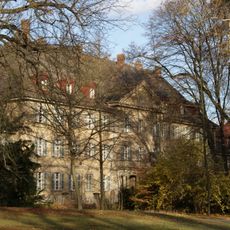
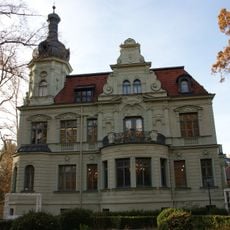
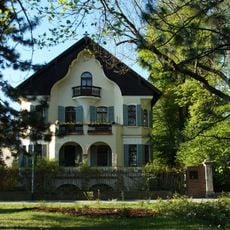
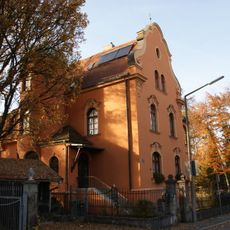
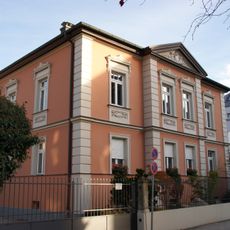
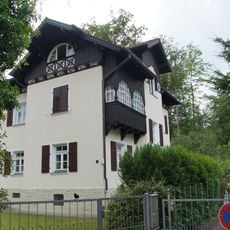
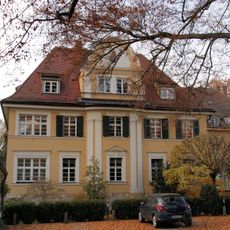
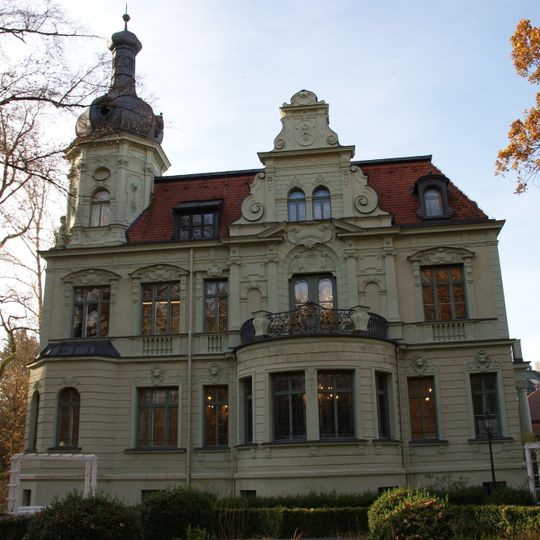
The Weinschenk-Villa is a neobaroque villa with Art Nouveau elements at Hoppestraße 6, behind Dörnbergpark in Regensburg. Architect Joseph Koch built it in 1898/99 for banker Max Weinschenk. Inside are historicist rooms, including an Arabic room, a Renaissance bay-window room and a Rococo salon.
Architect Joseph Koch built the villa in 1898/99 for Max Weinschenk, a Jewish banker, patron and liberal city councillor who ran a salon here with his wife Sophie. In 1920 the family moved to Munich and sold the house to Anna Günther; a garage followed in the garden in 1922. In 1936 it was rented to the Wehrbezirkskommando, after 1945 it housed the Regierungshauptkasse, from 1950 the Studienseminar St. Emmeram, later a Löwenbräu restaurant, before the Bezirk Oberpfalz bought and restored it.
The villa is named after Max Weinschenk, a Jewish banker, patron and liberal city councillor who, with his wife Sophie, made it a regional centre of urban salon culture. From 1996 to 2006 the Oberpfalz district's cultural office was based here, hosting readings by authors such as Margret Hölle and Godehard Schramm.
The villa is accessible by public transportation, and guided tours are available to explore the building and its surroundings. Before visiting, check current opening times as these may vary depending on the season.
In 1922 a garage for cars was built in the villa's garden, an early sign of motorisation. The painter Max Wissner kept his studio in the tower room around 1900. Inside, visitors can see an Arabic room, a Renaissance bay-window room and a Rococo salon.
The community of curious travelers
AroundUs brings together thousands of curated places, local tips, and hidden gems, enriched daily by 94,629 contributors worldwide.