Kastell Burgsalach, Roman burgus in Burgsalach, Bavaria, Germany
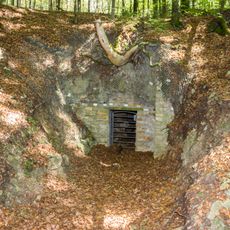
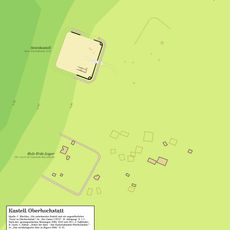
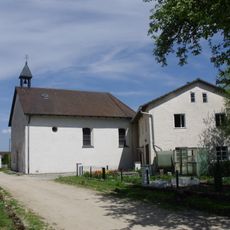
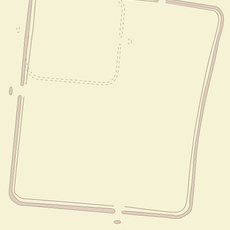
Kastell Burgsalach is a Roman fort built from stone blocks in a square shape measuring approximately 32 meters on each side. The walls survive to heights of up to 2 meters in some sections, with traces of ancient plaster still visible on the stonework.
Built in the 3rd century, the fort is among the youngest structures on the Upper Germanic-Rhaetian Limes. Its rectangular plan with a central courtyard and a semicircular apse is unique among German castella. A standards shrine proves the garrison was an independent centurial unit. In 1790 the ruins were still well preserved; early digs in 1800 and 1805 were followed by systematic excavation in 1916–17.
The fort served as a gathering place for soldiers and travelers from different regions. Religious practices took place at a shrine dedicated to the unit's standards, showing how faith and military identity merged in daily life.
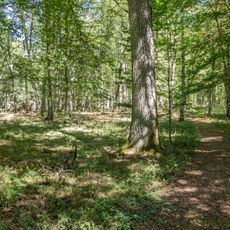
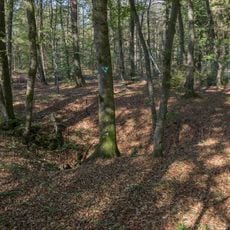
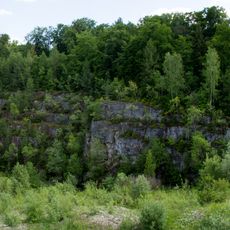
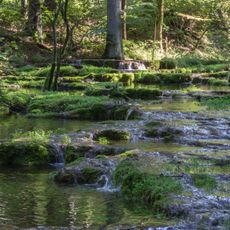
The site is accessible via Burgusstrasse and located in a wooded area with visitor-friendly paths. There is no entrance fee and the fort remains open to visitors at all times.
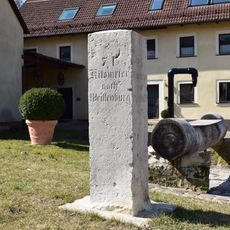
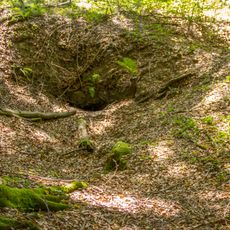
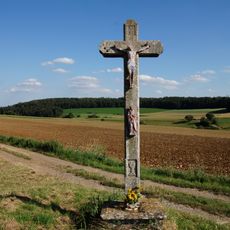
A local legend of a treasure buried "beim Schlössel" drew repeated looting digs; in 1831 a Roman key came to light during one such raid by farmers and reached Franz Anton Mayer's collection, who took it as the key of the main gate. In 1861 King Maximilian II of Bavaria had a memorial stele set up at the ruins, which wrongly calls the site a Colonia.
The community of curious travelers
AroundUs brings together thousands of curated places, local tips, and hidden gems, enriched daily by 94,155 contributors worldwide.