Stellerburg, Early medieval ring castle in Weddingstedt, Germany
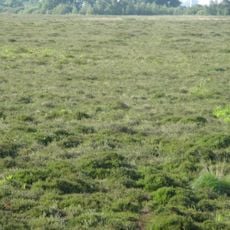
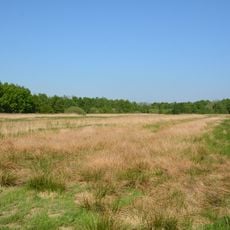
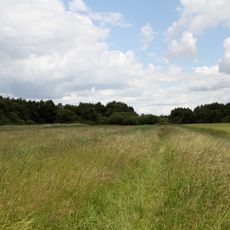
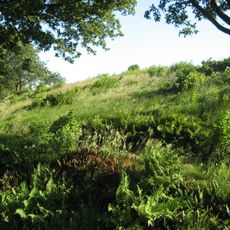
Stellerburg is an early medieval ring wall fortification in Weddingstedt, built from heaped earth embankments and sod materials with an oval shape. The structure includes substantial gateways on the north and east sides that controlled access to the enclosed area.
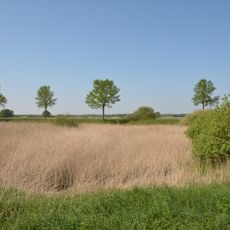
Stellerburg is a Saxon ring wall built before Charlemagne's conquest of Saxony, the northernmost Saxon defensive site. It stood on an island-like rise between the Geest and the Lundener Nehrung, on a long-distance trade route that Viking raiders had to pass, with moorland to the east and undiked, often flooded marsh to the west. Excavations by the Kiel museum in 1932/1933 uncovered a plank causeway inside the rampart and the ground plans of 20 wooden houses; few small finds suggest only temporary use.
A legend recorded by Karl Müllenhoff and already found in Neocorus tells how the Dithmarschen retook the castle: at Pentecost, while the garrison celebrated at village games, they marched up with green branches, and the gatekeeper called out "De Woold de kummt!" without raising alarm. The count was found in a cellar, and his wife Dortchen was drowned in a well still called Doortjensood.
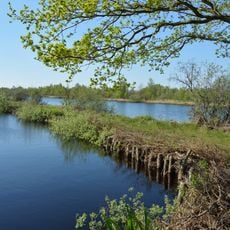
The site is accessible through walking and cycling routes, with information boards at the location providing historical background. Visitors should expect wet ground and boggy conditions, especially during wetter seasons.
It is the northernmost ring wall fortification of Saxon design in Germany, showing how far northern settlement extended in early medieval times. The oval shape and earthwork construction set it apart from other contemporary fortifications in the region.
The community of curious travelers
AroundUs brings together thousands of curated places, local tips, and hidden gems, enriched daily by 94,465 contributors worldwide.