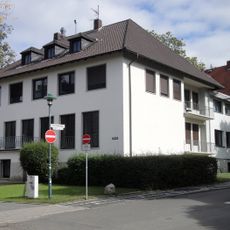
Ernst-Neufert-Haus, Post-war residential building in Darmstadt, Germany.
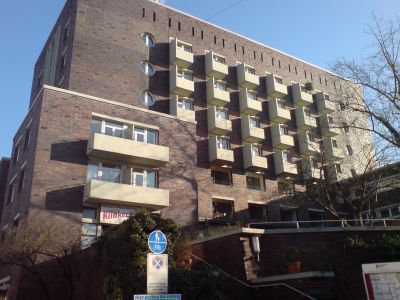
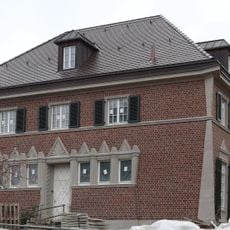
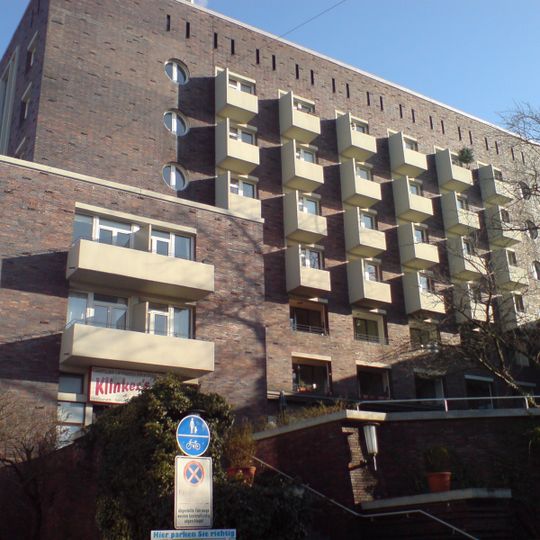
The Ernst-Neufert-Haus is a residential building in Darmstadt from the post-war period, composed of interlocking cubic segments with a brown clinker brick facade. Its layout shows the rational design principles of post-war modernism across multiple levels with varied apartment sizes.
The building was constructed between 1952 and 1955 as a hostel for single men with originally 131 small units during Germany's post-war reconstruction. A major renovation later transformed the cramped spaces into 82 more spacious apartments, some spanning multiple floors.
The building represents post-war modern design, a style that defined Germany's reconstruction after 1945. Visitors can see in the distinctive brick facade and geometric forms how forward-thinking the architecture of that era was.
The building is visible from outside and can be studied by visitors since it is a protected monument. Access to the residential areas is generally not open, but the architecture and design can be appreciated from the street.
The building was designed following the principles of Ernst Neufert, who worked under Walter Gropius and wrote standardization guidelines for construction. These principles made building more efficient and rational, which was crucial for rapid reconstruction after the war.
The community of curious travelers
AroundUs brings together thousands of curated places, local tips, and hidden gems, enriched daily by 92,017 contributors worldwide.