Electorate of Cologne, Ecclesiastical principality in North Rhine-Westphalia, Germany
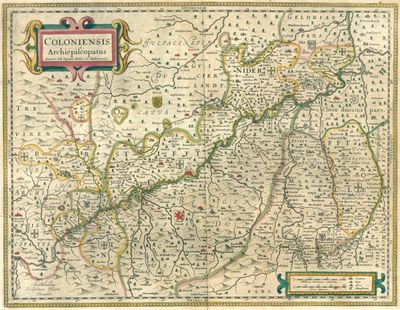
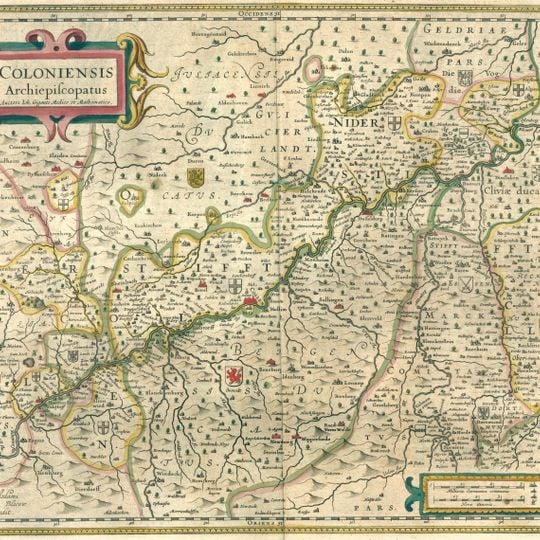
The Electorate of Cologne was an ecclesiastical territory stretching along the Rhine River and into Westphalia, with Cologne and Bonn serving as administrative centers. The realm had multiple territories scattered across the region rather than a single unified landmass.
The territory originated in 953 when Bishop Bruno received ducal authority from Emperor Otto I, establishing it as an ecclesiastical realm. It maintained its status until French forces occupied the region in 1794, bringing an end to its independent existence.
The Archbishop of Cologne held the title of arch-chancellor of Italy in the Holy Roman Empire, positioning himself as one of its most powerful ecclesiastical leaders. This role defined the territory's status and influence across the empire for centuries.
The territory was not a single connected region but rather comprised scattered possessions across multiple areas, making any attempt to traverse it a multi-directional undertaking. Understanding the full extent of the realm required visiting separate zones spread across the landscape.
This territory was one of only three prince-bishoprics holding electoral voting power in the Holy Roman Empire, a position that elevated it among the realm's most influential powers. This combination of religious authority and political voting rights made it a decisive player in the empire's power struggles.
The community of curious travelers
AroundUs brings together thousands of curated places, local tips, and hidden gems, enriched daily by 91,661 contributors worldwide.