Keckkapelle, Romanesque chapel in Kempten, Bavaria, Germany
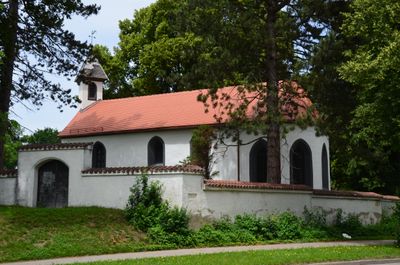
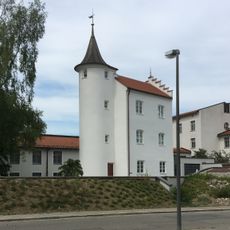
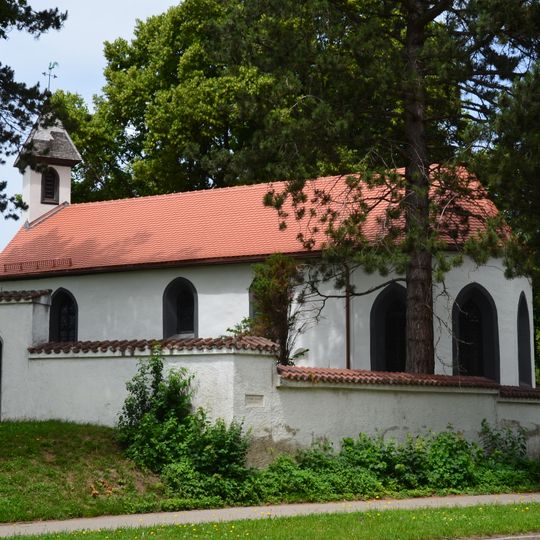
Keckkapelle is a small white-walled chapel with a steep red tiled roof and a round bell tower with a pointed roof built into the building. Three dark arched Gothic windows line the front wall, and white scrolls decorate the gable ends. A low white wall with red tiled coping runs in front of it, near trees and grass.
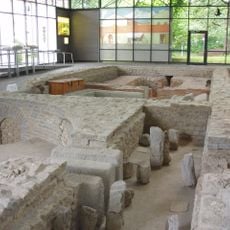
The chapel's Romanesque core dates from the High Middle Ages, as its masonry and round-arched windows uncovered in a 1930s renovation show. In the Gothic period it was rebuilt and given a polygonal choir, extended after 1451 with a 5/8 close and rib vault. It stands above the Roman cemetery of Cambodunum, the largest known burial ground of the ancient city, with over 400 graves from the 1st and 2nd centuries AD.
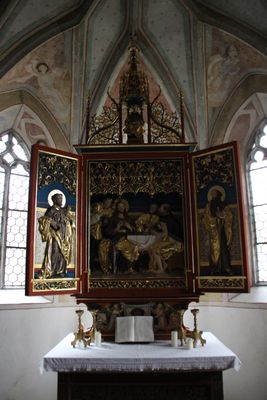
The interior walls display frescoes from 1460, attributed to either a painter from the Memmingen school or a Kempten-based artist.
The chapel is privately owned by a foundation and is not open to the public; Protestant services and devotions are held there a few times a year. The walled yard around it, originally the leper house cemetery, is entered through a segmental-arched gate on the south side and a rectangular gate on the north.
The full name Leprosenkapelle St. Stephan im Keck references its historical connection to a leper house. The latter part of the name comes from a former owner of the adjacent inn.
The community of curious travelers
AroundUs brings together thousands of curated places, local tips, and hidden gems, enriched daily by 93,191 contributors worldwide.