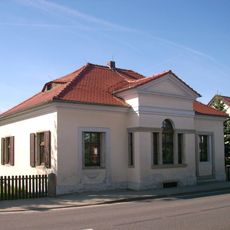
Schloss Königswartha, castle in Königswartha, Germany
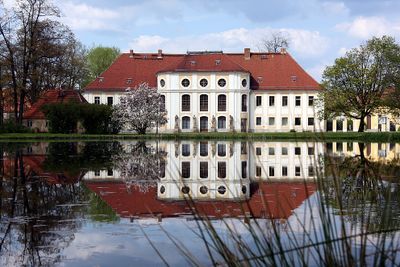
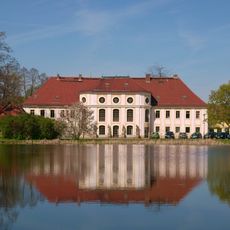
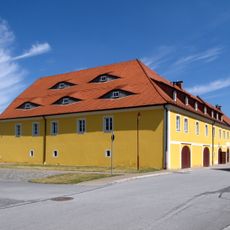
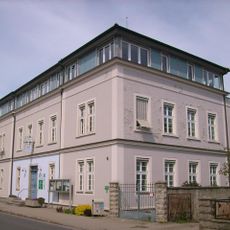
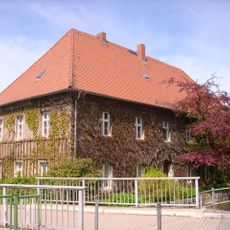
Schloss Königswartha is a two-storey building on a rectangular plan, 41 metres long and twelve metres wide, with fifteen window axes and a hipped roof. Its late-Baroque facades already show Classical forms: plain pilaster strips and parapet panels, white pillars and frames contrasting with yellowish infill. The garden side has a rounded central projection topped by a half-storey; inside, a garden hall and main hall are rounded inward with niches.
A water castle stood in the western part of the site by the 13th century, guarding the old road from Bautzen to Hoyerswerda; in 1238 it was the seat of Suidegerus de Warta, from whom the place name derives. From 1350 to 1550 the lords of Pannewitz held it. Johann Carl Friedrich von Dallwitz had the old castle demolished and the present building erected between 1780 and 1796; he died in the year it was completed and left it to his brother Johann Maximilian.
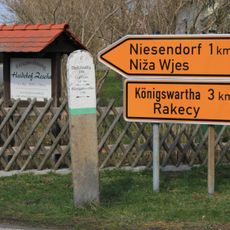
The village name Königswartha derives from the old water castle, a guard post of the Bohemian king on the road from Bautzen to Hoyerswerda; "Warte" means watchpost. The castle later housed a lordship that was one of the largest in Upper Lusatia until 1661. Today the site is a state fisheries school, one of only three in Germany training fish farmers.
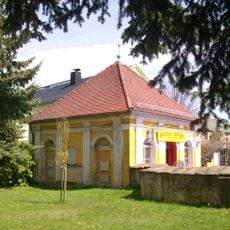
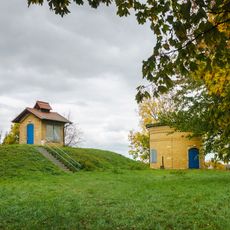
The castle is a listed monument and is not open to tourists; the interior and the fish-farming school cannot be visited. The palace park and the orangery from 1870, rebuilt in 1992–1993, are visible from the outside. A renovation of the complex, including the orangery and the park, was planned for around 2022 to 2024, so parts may be cordoned off.
The castle is not open to tourists, but the Orangerie built in 1870 was converted in 1950 into a biological research station, reconstructed in 1992–1993, and has hosted weddings since 2007. The building south of it, erected in the late 1970s, serves as the dormitory for the fisheries school.
The community of curious travelers
AroundUs brings together thousands of curated places, local tips, and hidden gems, enriched daily by 93,665 contributors worldwide.