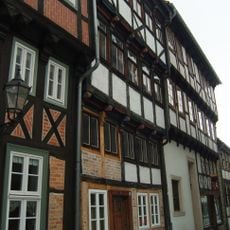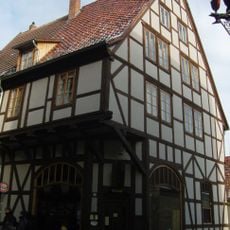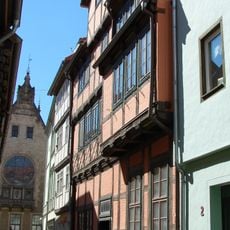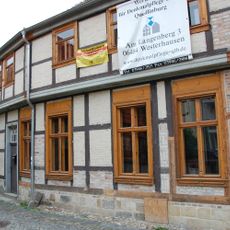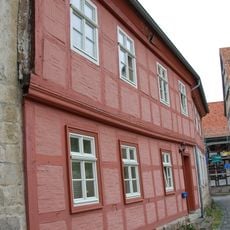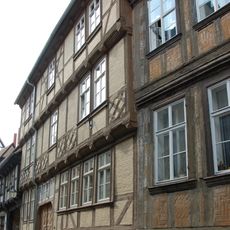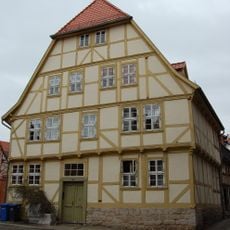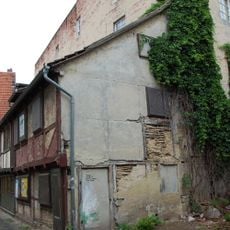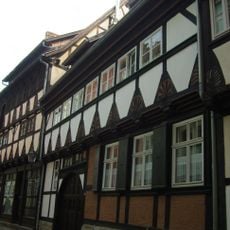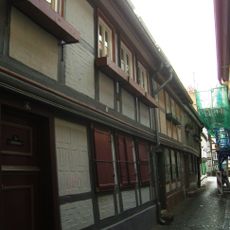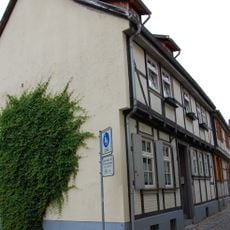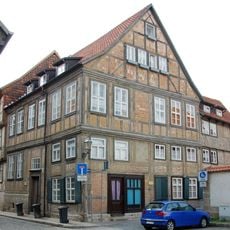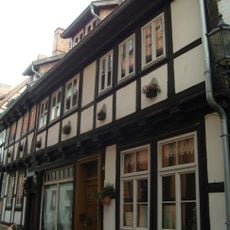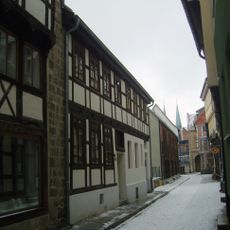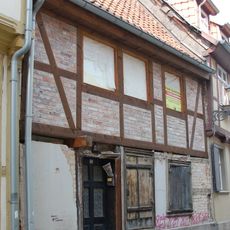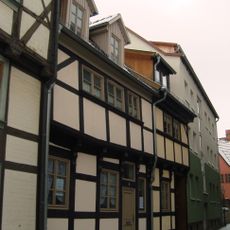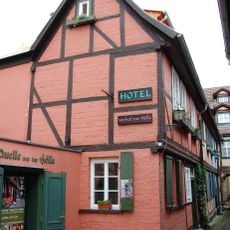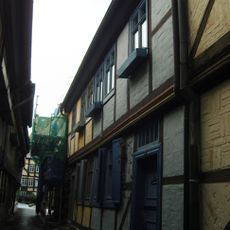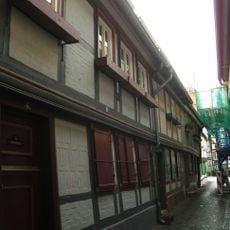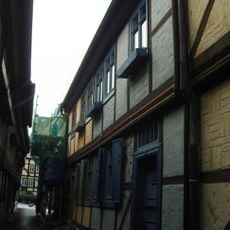
Höllenhof, Medieval timber-framed house in Quedlinburg, Germany
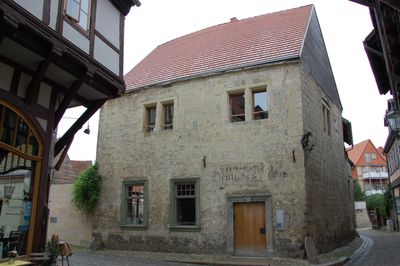
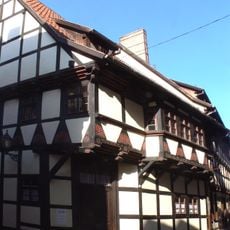
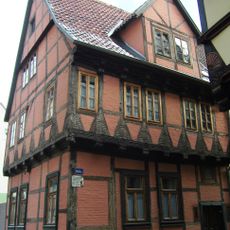
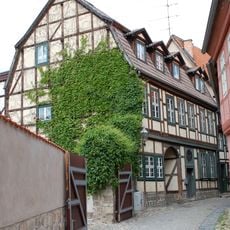
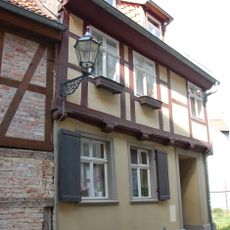
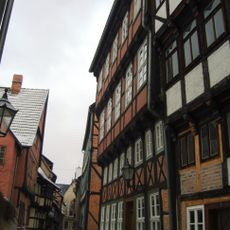
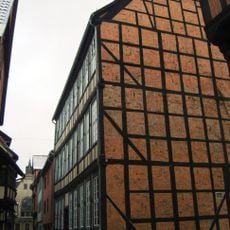
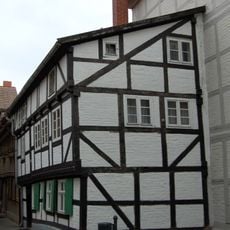
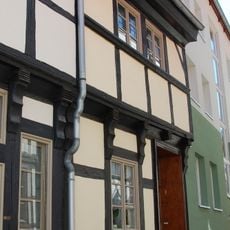
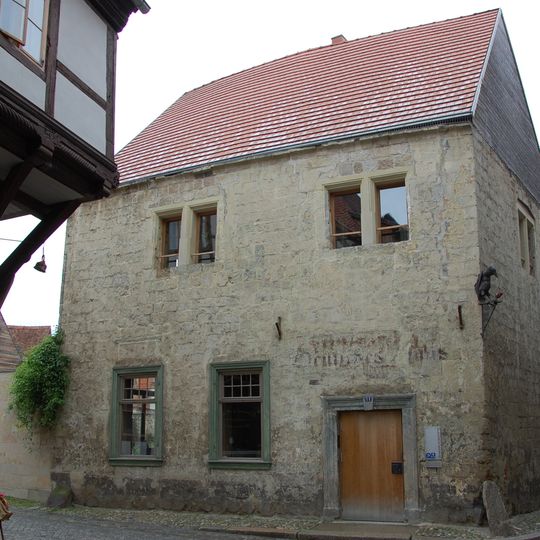
Höllenhof consists of three massive buildings along Hölle street with a total length of 24 metres. The southern part has rendered sandstone blocks and a roof dated to 1295; the northern corner building retains about two-thirds of its 13th-century sandstone walls and timber beams. The middle section was added later.
Dendrochronology dates the oldest ceiling beams to 1215 and the roof to 1295; the house was built in three stages up to 1301, before Quedlinburg's final town wall was finished. A 1233 charter mentions a court and house 'in der Pölle, die Hölle Infernus', attributed to the Höllenhof and possibly owned by the clothier Thankolf and his wife Swanhild. In the 16th century it lodged the Brotherhood domus Corporis Christi and was later owned by the electoral city bailiff Friedrich Quenstedt, who used it as a brewing house.
The building contains a black kitchen from the 17th century with an open hearth and a vaulted cellar beneath it. The upper floor was originally designed as a ceremonial hall and served for formal gatherings with large window openings.
The building underwent extensive renovation from 2005 to 2007 and now stands at Hölle 11, east of the marketplace. It is easily accessible on foot from Quedlinburg's center.
The hall built in the courtyard in 1888 became a cinema from 1909; by 1912 it was advertised as the Kinosalon Fürstenhof, Quedlinburg's largest and most select movie theatre. A half-timbered commercial building erected in the courtyard in 1893 was demolished in 2002.
The community of curious travelers
AroundUs brings together thousands of curated places, local tips, and hidden gems, enriched daily by 92,712 contributors worldwide.